2026-07-21
Shall we learn about skin structure before getting cosmetic procedures?
Understand your skin's structure (epidermis, dermis, subcutaneous fat) before cosmetic procedures. This knowledge helps you make informed decisions and ensures better, safer outcomes.

Hello. This is SNU Plastic Surgery Clinic, where we provide dermatology & plastic surgery treatments.
Today, we're going to learn about skin structure. Many people who regularly receive facial skin treatments often just consult on their desired outcome and then proceed with the treatment at the discretion of the practitioner.
As a result, they often receive treatments without fully understanding all the devices used, let alone the structure of their own skin. That's why I'm writing this article: to help you understand at least the structure of your skin before undergoing such procedures.
Skin Structure
Our skin has a flesh color, as seen with the naked eye, and if you pinch the skin with two fingers, you'll notice some areas where you can grab a lot and others where you can't.
The areas where you can grab a lot are, of course, those with more muscle and fat, while the areas where you can't are those with less muscle and fat.
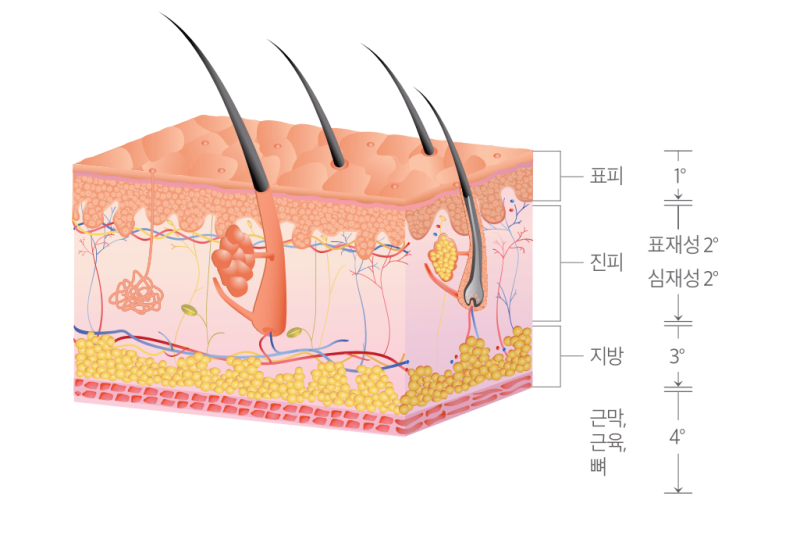
However, the visible skin itself is largely composed of three layers. From the outermost to the innermost layer, they are the epidermis, dermis, and subcutaneous fat layer. The epidermis is the layer we see, and beneath it are the dermis and subcutaneous fat layer.

These three layers are what we feel when we pinch our facial skin; the skin is divided at that level.
Although it appears as a single, unified skin layer to the eye, ultra-precision imaging reveals that anatomically it's composed of three layers. To make this easier to understand, consider pork belly: it's made up of three layers of lean meat and fat.
Even more delicious ‘five-layered pork belly’ includes the skin (rind) layer in addition to the lean meat and fat layers. Similarly, our skin is anatomically divided like pork, so all cosmetic or functional procedures must pass through these skin layers.
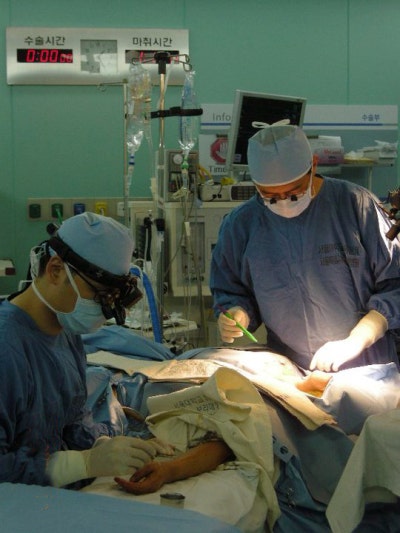
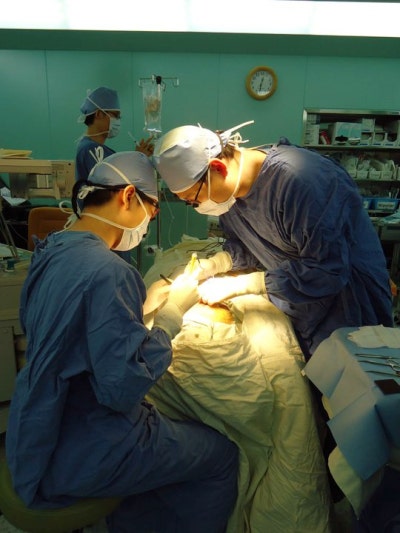
Skin Accessibility Depending on the Procedure
Diseases that occur in the outermost layer, the epidermis, include epidermal cysts, epidermal nevi, and epidermolytic hyperkeratosis.
Diseases that occur in the dermis include telangiectasia, port-wine stains, dermatofibrosarcoma, and blisters (bullae). And diseases that occur in the subcutaneous fat layer include panniculitis, recurrent panniculitis, lipomas, and mesenteric panniculitis.
Among common skin conditions, acne is often thought to occur in the epidermis based on the above explanation, but it actually occurs in the dermis or subcutaneous fat layer. Warts, as seen with the naked eye, are diseases that occur in the epidermis.

Corns are diseases that primarily occur in the stratum corneum when anatomically accessed deeper within the epidermis. Skin tags generally appear in the epidermis, but when they are larger and appear more unsightly, they are diseases that occur deeper in the dermis.
You might be surprised to learn that acne is not an epidermal condition. This shows that the skin is not just what we see; it has various layers with anatomical structures we may not be aware of.
For example, Botox, which has been consistently popular and widely used since the 2000s, is a procedure that requires injecting into the patient's skin, reaching through the epidermis, dermis, subcutaneous fat layer, and even into the muscle layer.

The unmentioned muscle layer is located deeper than the three skin layers, and even deeper still are ligaments, tendons, and nerves.
Therefore, while cosmetic procedures performed by dermatologists and plastic surgeons might seem very easy to patients upon reflection, there are many cases of side effects when receiving injections of the same ingredients if the medical staff does not have a deep understanding of the skin.
Such side effects arise when skin layers are penetrated too deeply, and specific structures are inadvertently affected. This means that seemingly simple procedures like Botox, fillers, and other injections are by no means simple, and a proper analysis of each patient's skin layers is essential to achieve the desired results.

That's why you might have found it difficult to understand why, after receiving various treatments at the same dermatology clinic, the results suddenly became unsatisfactory, or why pain or swelling persisted longer than usual.
In such cases, it could be that your skin has developed a tolerance to the periodic treatments, making them less effective, or that the practitioner has reached the limits of their skill.
In these situations, you should consider switching to a different dermatology or plastic surgery clinic. When seeking to improve wrinkles or elasticity, remember that there are various treatments available besides Botox and fillers. It's crucial to seek treatment from an experienced clinic to achieve your desired results.

















Frequently Asked Questions
How many main layers does the skin consist of?
Our skin consists of three main layers. From the outermost layer to the innermost layer, they are divided into the epidermis, dermis, and subcutaneous fat layer. These three layers are anatomically clearly separated, unlike what is visible to the naked eye.
What diseases can occur in each skin layer?
Various diseases can occur in each skin layer. Epidermal cysts, epidermal nevi, and warts can occur in the epidermis, while telangiectasia, port-wine stains, and skin tags (if large) can appear in the dermis. Panniculitis and lipomas can occur in the subcutaneous fat layer.
In which layer of the skin does acne occur?
Acne is a condition that primarily occurs in the dermis or subcutaneous fat layer, surprisingly not the epidermis. Many people believe it forms on the epidermis, but due to the anatomical structure of the skin, it originates in deeper layers.
Why is understanding skin structure important for injection procedures like Botox?
Understanding skin structure is very important for injection procedures like Botox because they need to reach beyond the epidermis, dermis, and subcutaneous fat layer to the muscle layer. Side effects can occur if the procedure is performed without an accurate analysis of the skin layers.
What should I do if side effects occur or the effectiveness decreases after a cosmetic procedure?
If pain or swelling persists or the effect is not satisfactory after a procedure, it may be due to skin tolerance from regular procedures or limitations in the practitioner's ability. In this case, it is advisable to visit another dermatology or plastic surgery clinic to consult with experienced medical staff and consider other procedures.