2026-07-21
Precautions for Botox Procedures and Multiple Plastic Surgeries
Learn about the precautions for Botox procedures, including resistance prevention with 'pure toxin' products, and the risks associated with 'marathon surgeries' involving multiple plastic surgeries at once.

Precautions for Botox Procedures and Multiple Plastic Surgeries

Hello,
This is Dr. J from Cheongdam SNU Plastic Surgery Clinic.
As the summer vacation season approaches,
we have many patients consulting us with concerns like,
‘I look stern when I have no expression.’
It's also a time when people become more interested in self-care they've put off.
Specifically, if the corners of the mouth naturally droop,
or if the muscles between the eyebrows are tense,
it can give off a ‘cold’ impression,
regardless of actual emotions.
In such cases, a simple procedure,
rather than surgery, can sufficiently
soften one's impression.
One of the most common methods is
Botulinum Toxin (Botox)
treatment.
The principle involves injecting botulinum toxin into the muscle
to prevent excessive muscle use,
thereby causing the muscle to shrink.
Through this principle, carefully adjusting the movement of the muscles
that create facial expressions
to change one's impression is also
widely used.

For example,
if botulinum toxin is injected into the muscles
that pull down the corners of the mouth,
it can create a natural impression with the corners of the mouth slightly
lifted, even when expressionless.
When injected into the glabella, it can create a relaxed and comfortable
expression without frowning or deep wrinkles.
The procedure is performed with minimal burden,
and most people can experience a naturally changed impression within 1-2 weeks,
making it suitable for those who want to subtly refine their appearance
before their summer vacation.

However, if considering repeated procedures
for continuous effects,
one must be careful about ‘resistance.’
If resistance to botulinum toxin develops,
the effect of the same procedure gradually weakens
and eventually, no reaction occurs.
Especially for micro-area procedures,
instead of applying small doses,
the frequency of repetition may increase,
making it important to establish a resistance prevention strategy
in advance.
Methods to Prevent Botox Resistance
The key to preventing such resistance is
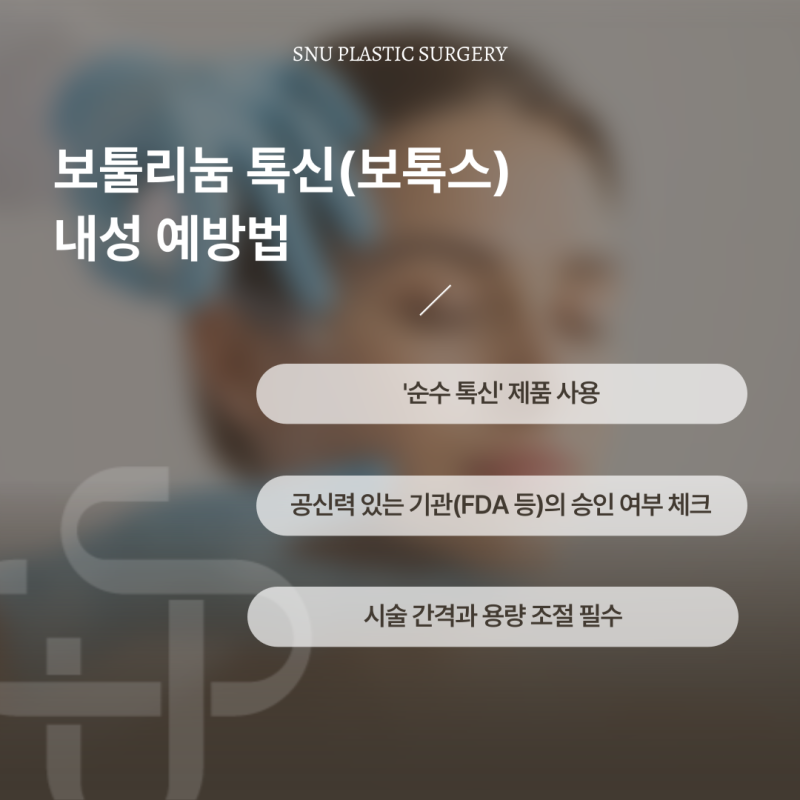
to use ‘pure toxin’ products.
Most botulinum toxin (Botox) products
contain complex proteins and inactive substances in addition to neurotoxin,
which can contribute to antibody formation.
In contrast, pure toxin products that have removed complex proteins
contain only activated neurotoxin,
which can lower the probability of resistance.
Furthermore, even among identical ‘pure toxin’ products,
the quality can vary depending on the manufacturing process
and the excipients included in the product,
requiring careful comparison.
It is also advisable to check for approval from reputable organizations
such as the U.S. Food and Drug Administration (FDA).
In addition to product selection,
the interval and dosage of the procedure
are also important factors in preventing resistance.
Care must be taken not to repeat procedures with excessive doses or excessively short intervals.
Precautions for Marathon (Multiple) Plastic Surgeries
Meanwhile, even simple procedures like botulinum toxin
require such delicate management,
but sometimes, to achieve rapid changes in appearance,
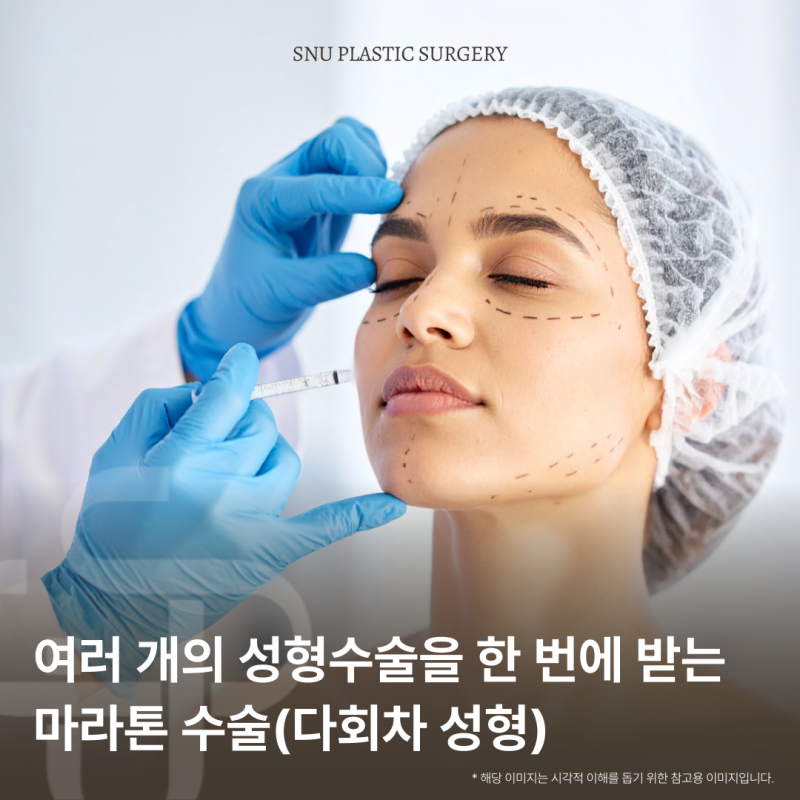
some choose ‘marathon surgery’
which involves undergoing several plastic surgeries at once.
Recently, a transgender model abroad
underwent an extreme case of 15 surgeries in one day.
This surgery, which included forehead line contouring, cheek fat grafting, nose surgery,
lip adjustment, uvula removal, and breast augmentation,
took over 10 hours
and ultimately required emergency re-surgery due to a hematoma
immediately after the operation.
It was reported that after the surgery, the patient experienced swelling,
bruising to the extent of being unrecognizable, and emotional instability.
As such, multiple marathon plastic surgeries
involve general anesthesia for 6-10 hours or more,
which can cause complications such as
excessive bleeding, infection, respiratory depression,
shock, and cardiac arrhythmia.
Especially for those with weak cardiovascular or pulmonary function,
there is a risk to life.
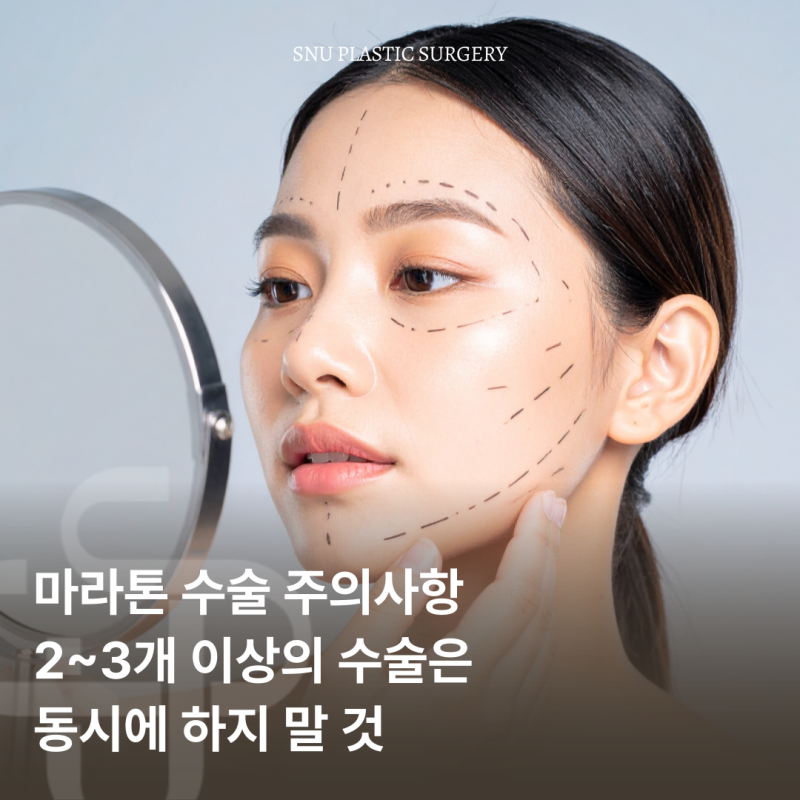
Plastic surgeons recommend
not undergoing more than two or three surgeries simultaneously.
If you are undergoing multiple surgeries in different areas,
they should be performed with intervals.
Low-risk surgeries like fillers or nose surgery
should have an interval of 2-4 weeks,
while high-risk surgeries like breast augmentation or uvula removal
should have an interval of 4-6 weeks or more.
While performing multiple surgeries simultaneously offers advantages
in reducing the number of anesthesias, shortening recovery time,
and cost savings, the side effects are also severe.

Especially in the case of plastic surgery,
where multiple area surgeries are common, such as combining double eyelid and epicanthoplasty,
or undergoing a 'contouring triple' procedure that includes cheekbones, jaw, and square jaw at once,
extra caution is needed.
The principle of plastic surgery is to prioritize patient safety by adhering to the appropriate scope and sequence of surgeries.
Especially during times like the upcoming vacation season, when interest in appearance increases,
a plan that considers long-term safety and satisfaction, rather than short-term changes,
is necessary.
Even simple procedures like botulinum toxin (Botox)
require complex considerations such as product, dosage, treatment interval, and resistance management,
and surgery should be approached even more cautiously.
Please consult sufficiently with a specialist
to find a safe method that suits you.
✔️ Homepage
✔️ KakaoTalk Channel (Click image below to move)