2026-07-21
Drinking at New Year's Gatherings: How Much is Too Much?
Learn about safe alcohol consumption and the risks of excessive drinking at New Year's gatherings. Understand guidelines for moderate drinking and tips for responsible consumption to protect your health.
Hello, this is Dr. J.
Today's topic is alcohol consumption and drinking limits.
We should be careful not to harm our health, shouldn't we?
I will inform you about the appropriate amount and the risks that excessive drinking can bring.
As the new year begins, many people gather with family and friends to celebrate, often enjoying a drink or two. For centuries, alcohol has been a social lubricant,
and in some cultures, when consumed in moderation, it has been considered a healthy medicine.
But when does alcohol cross the line from a harmless indulgence or ‘medicine’ to a health-damaging poison?
Let's explore the boundary between safe consumption and excessive drinking.
Alcohol as ‘Medicine’
The idea that alcohol can have medicinal properties is not new.
In fact, moderate alcohol consumption has been linked to several health benefits.
1. Heart Health
Studies suggest that moderate consumption, especially of red wine,
can improve heart health thanks to antioxidants like resveratrol.
2. Stress Relief
Small amounts of alcohol can help people relax and temporarily reduce stress.
3. Social Bonding
Sharing drinks with loved ones can help foster social connections,
which is important for mental health.
However, these potential benefits only apply to moderate drinking and do not extend to heavy or binge drinking.
How Much is Too Much?
The amount of alcohol considered safe can vary depending on age, gender, weight, and overall health.
Here are some general guidelines:
1. Moderate Drinking
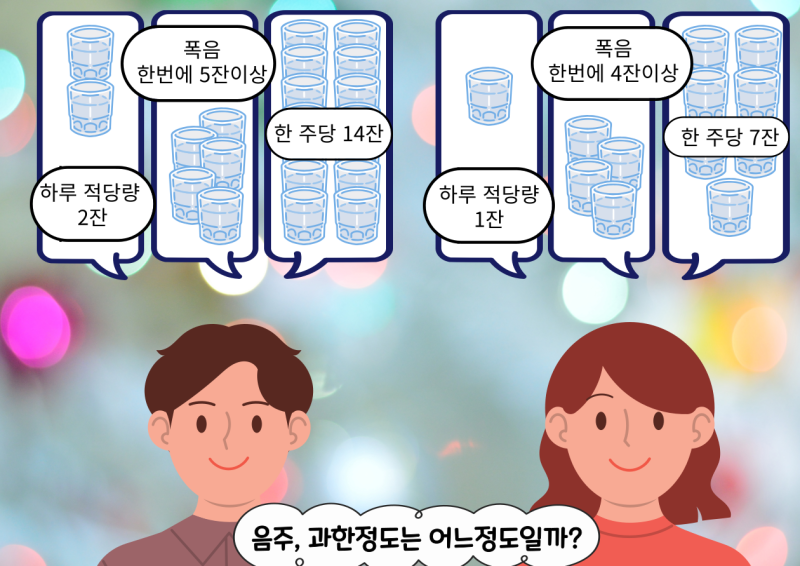
o Men: Up to 2 drinks per day
o Women: Up to 1 drink per day
2. Binge Drinking
o Consuming 4 or more drinks at one time for women, or 5 or more for men, is considered binge drinking,
which can lead to immediate and long-term health risks.
3. Weekly Consumption Limits
o The Ministry of Health and Welfare recommends not exceeding 14 drinks per week for men and 7 drinks per week for women.
What is a Standard Drink?
• 1 glass of wine (approx. 150ml, 12% alcohol content).
• 1 to 1.5 glasses of beer (approx. 355ml, 5% alcohol content).
• 1 shot of spirits (approx. 44ml, 40% alcohol content).
Risks of Excessive Drinking
Drinking beyond moderate limits can lead to serious health problems.
1. Immediate Effects
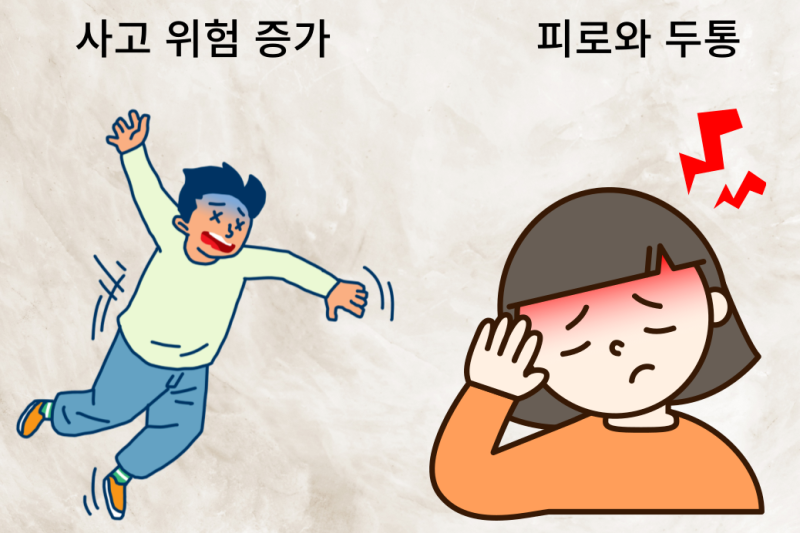
o Impaired judgment, coordination, and reaction time increase the risk of accidents.
o Dehydration and hangovers can cause fatigue and headaches.
2. Long-Term Effects
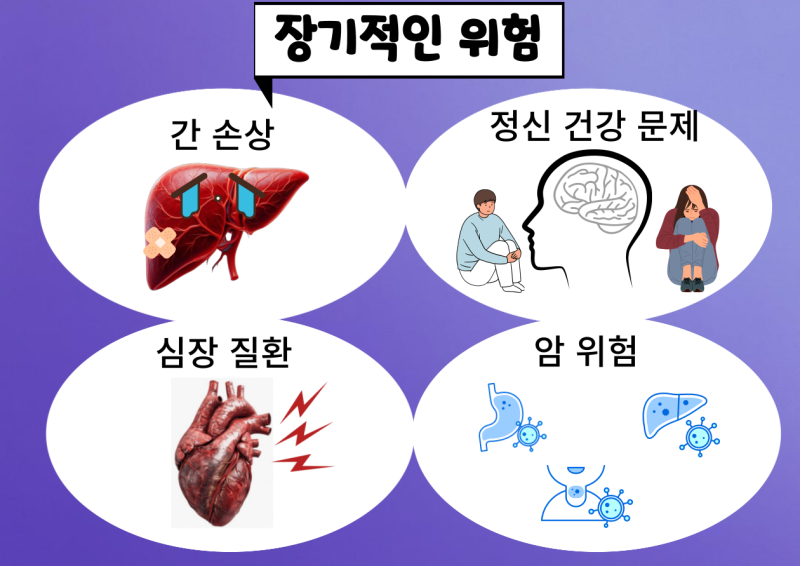
o Liver Damage: Chronic excessive drinking can lead to liver diseases such as fatty liver, hepatitis, and cirrhosis.
o Heart Problems: Excessive alcohol intake increases the risk of high blood pressure, arrhythmias, and cardiomyopathy.
o Mental Health Issues: Alcohol abuse can worsen anxiety, depression, and other mental health disorders.
o Cancer Risk: Alcohol consumption is linked to an increased risk of certain cancers, including oral, throat, liver, and breast cancer.
Responsible Drinking During Gatherings
1. Know Your Limits
o Understand your alcohol tolerance and follow recommended guidelines.
2. Drink Slowly
o Consume water or non-alcoholic beverages between alcoholic drinks.
o Drink slowly to avoid overconsumption.
3. Do Not Drink on an Empty Stomach
o Eating food before or during drinking slows alcohol absorption and reduces its effects on the body.
4. Designate a Driver
o If you plan to drink, make arrangements beforehand for a safe way to get home.
5. Listen to Your Body
o If you feel unwell or experience negative effects from drinking, it's best to stop immediately.
▩Final Thoughts▩
Alcohol can be a delightful part of celebrations, especially at New Year's gatherings, but it's crucial to consume it in moderation.
A drink or two can enhance the festive atmosphere, but excessive drinking can lead to harmful consequences for your health and well-being.
By understanding the risks and drinking responsibly, you can enjoy social connections while protecting your health.
Wishing you a healthy and happy New Year!♥
Frequently Asked Questions
What is a moderate amount of alcohol consumption?
Moderate alcohol consumption is considered up to 2 drinks per day for men and up to 1 drink per day for women. The Ministry of Health and Welfare recommends that men do not exceed 14 drinks per week and women do not exceed 7 drinks per week.
What are the long-term health risks of excessive drinking?
Excessive drinking can lead to liver damage (fatty liver, hepatitis, cirrhosis), heart problems (high blood pressure, arrhythmia), mental health issues (worsening anxiety, depression), and an increased risk of certain cancers, such as oral cancer and liver cancer.
Are there any health benefits to alcohol consumption?
Yes, moderate alcohol consumption is associated with several health benefits. In particular, moderate consumption of red wine can help improve heart health, temporarily relieve stress, and foster social connections.
What are some tips for responsible drinking?
It is advisable to understand your alcohol tolerance, drink slowly, consume water between alcoholic beverages, and avoid drinking on an empty stomach. Additionally, it is important to designate a sober driver and listen to your body's signals.
What is the definition of binge drinking?
Binge drinking is defined as consuming 4 or more drinks for women and 5 or more drinks for men on a single occasion. This can lead to immediate and long-term health risks.
What is considered one standard drink?
One standard drink refers to approximately 150ml of wine (12% alcohol), 355ml of beer (5% alcohol), or 44ml of distilled spirits (40% alcohol).