2026-07-21
TMJ: Functional Management and Limits of Surgical Treatment from a Comparative Anatomical Perspective
This article discusses TMJ treatment, emphasizing functional management and pain control over anatomical restoration, drawing insights from comparative anatomy.
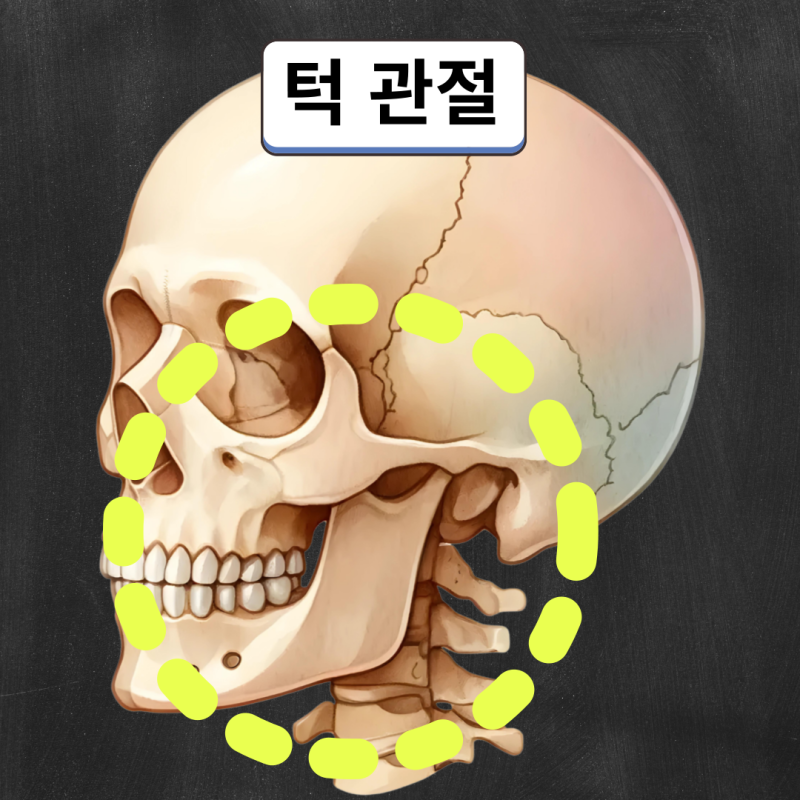
Hello. This is Dr. J.
Following our last topic, ‘Asymmetrical Jaw Muscles’, today's subject is the ‘Temporomandibular Joint’ (TMJ).
As it's a somewhat complex topic, I'll try to explain it in an accessible way.
Unlike other joints, the TMJ has a very unique structure and function.
From a comparative anatomical perspective,
Reptiles consume food by opening their mouths without a TMJ,
This suggests that the human TMJ is not simply about restoring a precise shape,
but rather about focusing on the range of mandibular motion and pain management.
1. The Uniqueness of the TMJ: A Comparative Anatomical View
• Differences from Reptiles
Reptiles consume food by dislocating their jaw joint and opening their mouths wide.
In contrast, the human TMJ allows for complex movements,
while requiring delicate control of pain and mandibular motion.
• Significance
These anatomical characteristics imply that TMJ treatment should prioritize functional maintenance and long-term pain management,
rather than simply precise restoration of the joint's shape.

2. Treatment Plan: The Need for Functional Management
• Focus on Mandibular Range of Motion and Pain Management
The goal of TMJ treatment should be to improve the patient's pain and limited range of motion,
rather than precise anatomical restoration of the joint.
• Priority of Conservative Treatment
It is paramount to preserve one's natural TMJ, which has been used for a long time, as much as possible,
and for this, physical therapy, medication (including Botox injections), and non-invasive treatments should be applied first.
3. Current Treatment Status and Its Limitations
• Differences in Approach Between Dentistry and Plastic Surgery
Some dental practices primarily attempt open surgical treatments that directly access the joint (such as intra-articular injections or arthroscopic treatments), while some plastic surgery clinics may recommend facial contouring or orthognathic surgery (such as double jaw surgery) with a focus on aesthetic results.
• Importance of Functional Management
However, these treatment methods may have limitations in restoring and maintaining the essential function of the TMJ.
In particular, excessive aesthetic intervention carries the risk of long-term joint dysfunction,
so treatment plans should always be established with a focus on functional aspects.
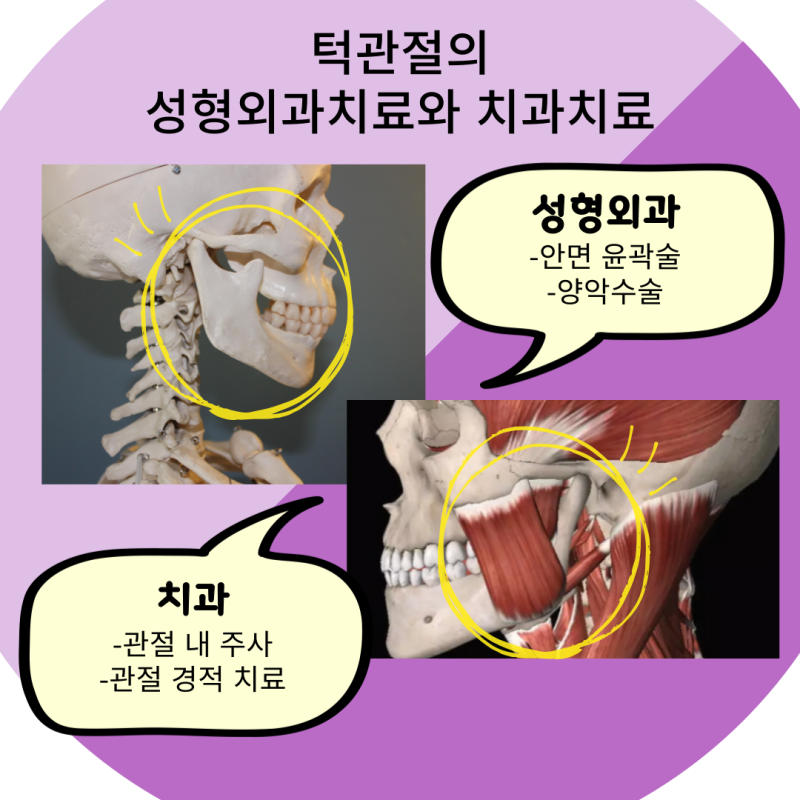
4. Limitations and Considerations of Surgical Treatment
• Difficulty Opening Mouth and Pain During Opening
If TMJ dysfunction is severe, leading to difficulty opening the mouth or severe pain during opening,
surgical treatment may be considered, but such surgeries are very limited.
• Limitations of Surgery
Surgical intervention should only be chosen for a very small number of patients with persistent extreme pain or dysfunction,
and in most cases, functional improvement through conservative treatment methods should be prioritized.
• Conclusion
Ultimately, the TMJ, due to its biological characteristics, should be recognized as ‘a natural joint to be preserved forever’,
and the goal should be functional management, pain relief,
and long-term improvement in range of motion, rather than artificial surgical restoration.
■Summary■
TMJ treatment goes beyond simply precise restoration of appearance or joint shape;
it must focus on the patient's mandibular range of motion and pain management.
It is important to maintain one's own TMJ healthily for as long as possible through functional management,
and surgical treatment should only be carefully considered in extremely limited cases, such as severe difficulty opening the mouth or intense pain.
I want to emphasize once again that this treatment strategy aims to improve the quality of life for individual patients
and minimize side effects from unnecessary surgical interventions.
I hope this article is helpful and aligns with the blog's direction and readership,
and please let me know if any further revisions or additions are needed.
Frequently Asked Questions
What is the most important goal of TMJ treatment?
The goal of TMJ treatment should be to improve the patient's pain and limited range of motion, rather than precise anatomical restoration of the joint. Functional maintenance and long-term pain management are prioritized.
Why is conservative treatment prioritized for TMJ?
Yes, conservative treatment is prioritized. It is most important to preserve one's own TMJ, which has been used for a long time, as much as possible, and for this, non-invasive treatments such as physical therapy and medication (including Botox) should be applied first.
When can TMJ surgery be considered?
Surgical treatment may be considered if TMJ dysfunction is severe, leading to difficulty opening the mouth or severe pain during opening. However, such surgeries are very limited and should only be chosen for a very small number of patients with persistent extreme pain or dysfunction.
Is there a difference in TMJ treatment approaches between dentistry and plastic surgery?
Yes, there is a difference. Some dental practices attempt open surgical treatments that directly access the joint, while some plastic surgery clinics may recommend facial contouring with a focus on aesthetic results. However, these treatments may have limitations in restoring function.
Should aesthetic aspects also be considered important in TMJ treatment?
No, functional management is more important than aesthetic intervention. Excessive aesthetic intervention carries the risk of long-term joint dysfunction, so treatment plans should always be established with a focus on functional aspects.