2026-07-21
Overseas Plastic Surgery: Prioritize ‘Your Body’ Over Price! 3 Things to Check Before Surgery
Before undergoing plastic surgery abroad, prioritize your health over price. This article outlines 3 crucial checks: chronic conditions, BMI, and medications, and introduces a helpful pre-assessment tool.


Hello,
This is Cheongdam SNU Plastic Surgery.
When deciding on plastic surgery abroad,
we usually focus on price, hospital reputation,
and the surgeon's skill.
While these are certainly important,
there's something even more crucial:
Can my current body condition safely endure this surgery and anesthesia?
This is the fundamental question.
No matter how skilled a surgeon is,
without accurate information about the patient's health,
it's difficult to predict numerous variables.
Today, for those planning overseas surgery,
we will explain the three core safety points
you must check yourself,
and how to prepare wisely.
1. Document your ‘chronic and underlying medical conditions’
Major variables determining the success or failure of surgery
are your usual health conditions,
such as high blood pressure, diabetes, and heart disease.
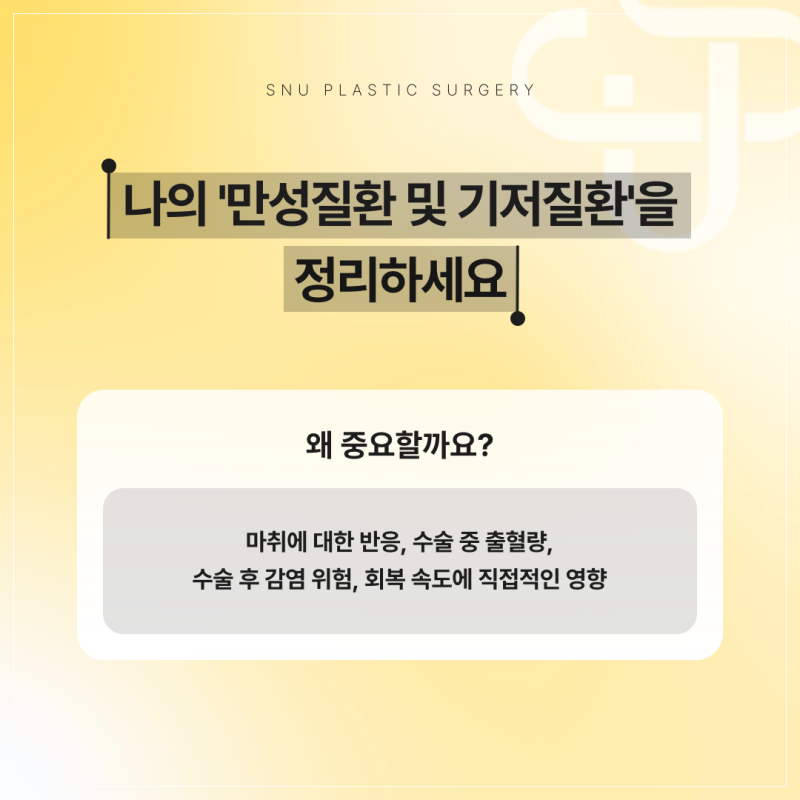
✅ Why is this important?
These conditions directly affect
your reaction to anesthesia, the amount of bleeding during surgery,
the risk of post-operative infection,
and your recovery speed.
✅ How to prepare?
Rather than a vague understanding like ‘my blood pressure is a bit high,’
it's best to specifically organize your health check-up results
from the past year (blood pressure, blood sugar, electrocardiogram, etc.).
This data will be the most basic yet
powerful tool during your consultation with medical staff.
2. Objectively assess your ‘Body Mass Index (BMI) and physical condition’
A high BMI (weight/height²) is also
considered a risk factor in surgery.
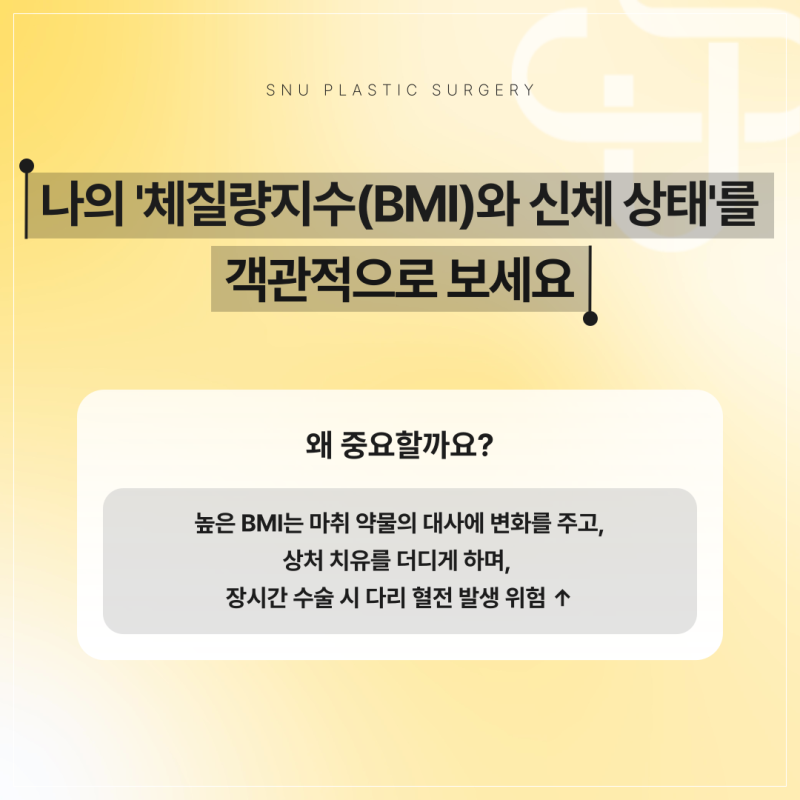
✅ Why is this important?
A high BMI can alter the metabolism of anesthetic drugs,
slow down wound healing, and significantly increase the risk of
leg blood clots (deep vein thrombosis)
during prolonged surgery.
✅ How to prepare?
Calculate your BMI in advance,
and if you are overweight or obese,
it's a wise approach to try managing your weight
for at least 2-3 months before scheduling surgery
to enhance surgical safety.
3. Thoroughly check ‘all medications you are currently taking’
Many people tend to overlook
the medications they take regularly.
This includes not only blood pressure and diabetes medications,
but also anticoagulants (blood thinners) like
aspirin or warfarin,
and even some antidepressants or
anti-anxiety medications, which are directly related to surgery.
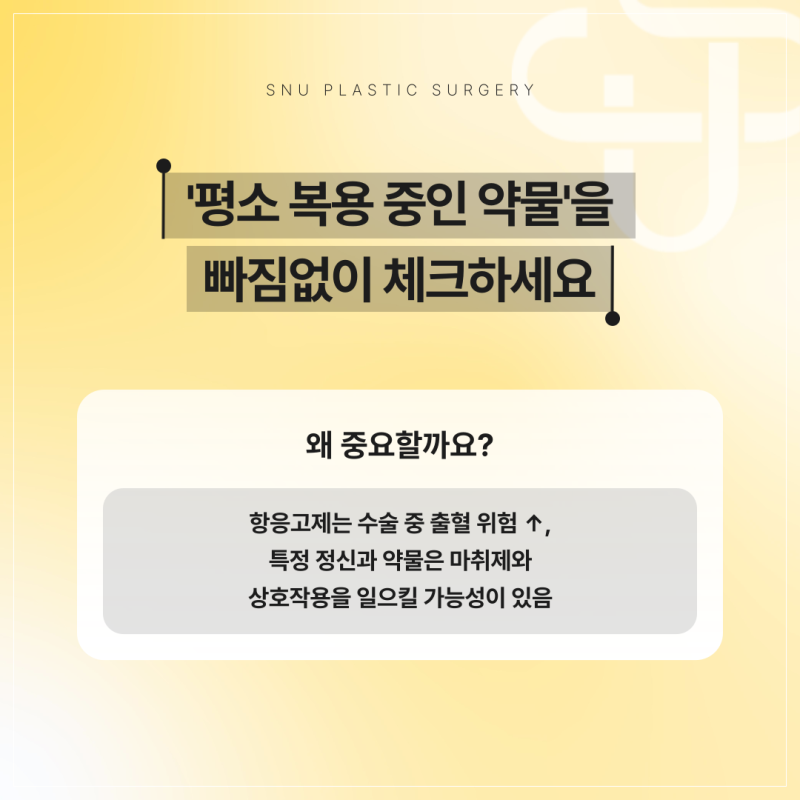
✅ Why is this important?
Anticoagulants drastically increase the risk of bleeding during surgery,
and certain psychiatric medications can interact with anesthetics.
✅ How to prepare?
Record the generic name and dosage of all medications you are taking,
and before surgery, be sure to consult with your prescribing doctor
or the anesthesiologist about whether medication adjustment is needed.
Patients should never stop or adjust medications on their own.
✨ Once you've organized this, now ‘set your direction’
If you have checked these three points yourself,
you are now ready to have an in-depth conversation with the medical team based on this information.
Before entering the operating room,
be sure to ask your surgeon:
1. How do my risk factors (e.g., high blood pressure/high BMI) specifically affect this surgery and anesthesia?
2. When and how should the medications I am taking be adjusted before and after surgery?
3. Would it be safer to perform multiple procedures separately rather than all at once?
✨ If this assessment feels overwhelming, ‘try Safetypass’
You know what items to check yourself,
but actually organizing them can be complicated,
and you might feel overwhelmed about where to start.
In such cases, a free tool you can refer to is
‘Dr. Jeong Safety Passport™
(safetypass.surgix.uk)’.
▼ ▼ ▼
Dr. Jeong Safety Passport™
Beautiful surgery begins with a safe choice.
safetypass.surgix.uk
This site is an educational pre-assessment tool created by a plastic surgeon,
and it's easy to use without any burden due to the following features:
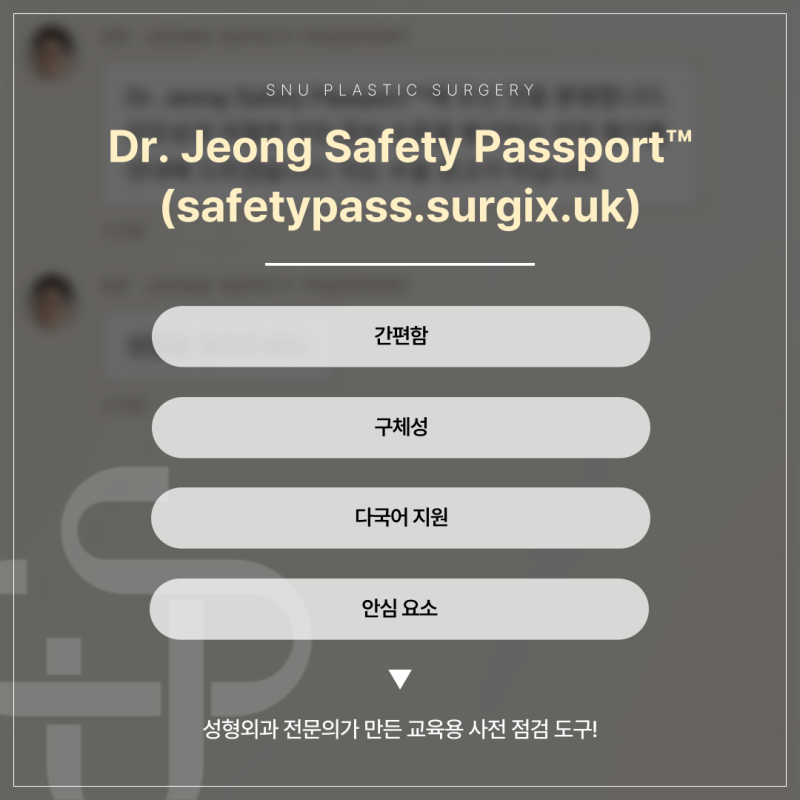
✨ Simplicity
You can answer interactive questions in about 3-5 minutes
without needing to register.
✨ Specificity
It thoroughly covers chronic conditions, BMI,
and medications mentioned above,
and divides the results into Pathway A~D,
providing reference directions based on risk levels.
✨ Multilingual Support
It supports Korean, English, Chinese, and Japanese.
✨ Reassuring Features
Providing anonymous data for research is optional,
so you can view the results even if you don't consent.

📍Please remember!
This tool does not replace a doctor's consultation or diagnosis.
However, before booking surgery or purchasing airline tickets,
it will serve as an excellent starting point for objectively reviewing your condition
and preparing questions for the medical team.
Beautiful results
begin with thorough preparation.
Be sure to check the three assessment points introduced today,
and wisely utilize Safetypass if needed.^^
We support your precious body
and safe choices😊
.
.
*This article is for educational and informational purposes only
and does not replace professional consultation and treatment
by qualified medical staff.
Always consult with a specialist doctor.
Homepage
📌 KakaoTalk Channel (Click image below to move)


Frequently Asked Questions
Why is checking your health status before overseas plastic surgery important?
Yes, it's very important. A patient's health status directly affects the success of surgery, including anesthesia response, bleeding amount, infection risk, and recovery speed. Even a highly skilled surgeon finds it difficult to predict variables without accurate health information about the patient.
What chronic conditions should be checked before surgery?
Chronic conditions such as high blood pressure, diabetes, and heart disease should be checked. Specifically organizing health check-up results from the past year (blood pressure, blood sugar, electrocardiogram, etc.) will be very helpful during consultations with medical staff.
How does a high BMI affect surgery?
Yes, a high BMI is considered a risk factor during surgery. A high BMI can alter the metabolism of anesthetic drugs, slow down wound healing, and significantly increase the risk of leg blood clots during prolonged surgery.
What should be done about medications being taken before surgery?
Record the generic name and dosage of all medications you are taking, and before surgery, you must consult with your prescribing doctor or the anesthesiologist about whether medication adjustment is needed. Patients should never stop or adjust medications on their own.
Is there a tool that can help with pre-surgical health checks?
Yes, you can use a free pre-assessment tool called ‘Dr. Jeong Safety Passport™’. This tool thoroughly covers chronic conditions, BMI, and medications, and provides reference directions based on risk levels.