2026-07-21
Optimal Sleep Methods for Health and the Impact of Naps
Discover optimal sleep methods and the impact of naps on your health. Learn tips for healthy sleep, recommended durations, and how to effectively use naps for better well-being.
Hello, this is Dr. J.
Today, we will be discussing ‘sleep’, a very important part of our health.
Sufficient and high-quality sleep is essential for maintaining health and well-being.
Sleep goes beyond simply relieving fatigue; it plays a crucial role in strengthening the immune system, improving memory, and helping with emotional regulation.
Consider the following methods and proper time management for healthy sleep.
※ Tips for Healthy Sleep
1. Maintain a Regular Sleep Schedule
Try to go to bed and wake up at the same time every day.
It's important to maintain a consistent pattern even on weekends.
2. Optimize Your Sleep Environment
Keep your bedroom dark, quiet, and at a comfortable temperature.
It's best to reduce smartphone and tablet use 1-2 hours before bedtime to block blue light.
3. Create a Sleep Routine
Develop a habit of calming your body and mind with relaxing activities before bed, such as a warm bath, reading, or meditation.
4. Regulate Caffeine and Alcohol Intake
Caffeine can interfere with sleep, so avoid consuming it in the afternoon. Alcohol disrupts deep sleep, so maintain a moderate intake.
4. Appropriate Exercise
Regular exercise helps improve sleep quality, but it's best to avoid high-intensity exercise right before bed.
※Recommended Sleep Duration※
The amount of sleep needed varies by age, but adults generally need 7-9 hours per day.
The Usefulness and Limitations of Naps
When used correctly, naps can be effective in recovering from fatigue and improving concentration.
However, excessive or ill-timed naps can actually be detrimental to your health.
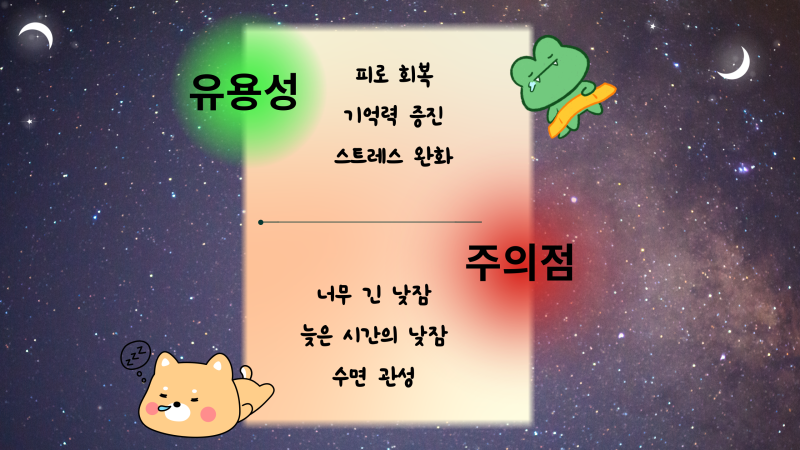
☆The Usefulness of Naps☆
1. Fatigue Recovery: A short nap of about 20-30 minutes helps restore vitality and increase afternoon productivity.
2. Memory Enhancement: Studies show that naps have a positive effect on learning and memory consolidation.
3. Stress Reduction: A brief rest can reduce stress and stabilize your mood.
!Precautions for Naps!
1. Too Long Naps: Naps longer than 1 hour can affect nighttime sleep and may even increase fatigue.
2. Late Naps: Napping late in the afternoon is likely to disrupt your nighttime sleep rhythm.
3. Sleep Inertia: You might experience a groggy state immediately after waking up from a nap.
♥Healthy sleep begins with regularity and proper environmental management♥
Naps can have positive effects when used appropriately, but their timing and length must be carefully controlled.
Understand your body's sleep patterns and apply them well to your daily life to enjoy better health and quality of life.
★May you all have a good night's sleep★
Frequently Asked Questions
What efforts are needed for healthy sleep?
For healthy sleep, it's important to maintain a regular sleep schedule, optimize your bedroom environment, create a bedtime routine, regulate caffeine and alcohol intake, and engage in appropriate exercise. Specifically, it's recommended to reduce smartphone use 1-2 hours before bedtime to block blue light.
What is the recommended sleep duration for adults?
Generally, adults need 7-9 hours of sleep per day. The amount of sleep needed can vary by age, so it's important to identify the appropriate sleep duration for your own body.
How do naps benefit health?
Naps have positive effects on fatigue recovery, memory enhancement, and stress reduction. A short nap of about 20-30 minutes is particularly effective in restoring vitality and increasing afternoon productivity.
What should I be careful about when taking a nap?
Yes, there are a few things to be careful about when taking a nap. Naps longer than 1 hour can affect nighttime sleep and may even increase fatigue, and napping late in the afternoon is likely to disrupt your nighttime sleep rhythm.
What is the impact of smartphone use before bed on sleep?
Using a smartphone 1-2 hours before bed can interfere with sleep due to blue light. It's best to optimize your sleep environment by keeping your bedroom dark, quiet, and at a comfortable temperature, and by reducing smartphone use.
How do caffeine and alcohol affect sleep?
Caffeine can interfere with sleep, so it's best to avoid consuming it in the afternoon. Alcohol can disrupt deep sleep, so a moderate intake should be maintained. It's important to regulate your intake for healthy sleep.