2026-07-21
Lower Blepharoplasty: Fat Repositioning VS Skin Incision Method – Which to Choose?
Explore the two main types of lower blepharoplasty: transconjunctival fat repositioning and traditional skin incision. Understand their pros and cons to choose the best option for your needs.
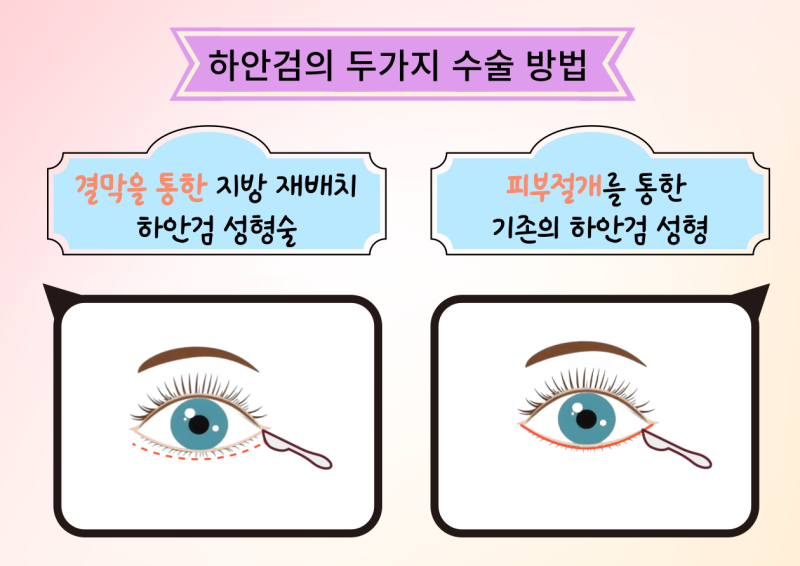
Hello. This is Dr. J. Today, we will learn about lower blepharoplasty.
There are two main types of lower blepharoplasty.
The two most widely performed surgical methods to address issues such as under-eye fat, puffiness, and skin laxity in the lower eyelid area are transconjunctival fat repositioning lower blepharoplasty and traditional skin incision lower blepharoplasty.
Both approaches have their advantages and disadvantages, and understanding these differences is crucial for choosing the optimal surgical method that suits individual needs.
Ⅰ Fat Repositioning Lower Blepharoplasty
This minimally invasive technique is performed by making an incision on the inner surface of the lower eyelid (conjunctiva),
removing or repositioning excess fat to create a smooth under-eye contour without external scars.
※Advantages
1. Scarless Approach
The incision is hidden inside the eyelid, leaving no external scars.
2. Preservation of Eyelid Structure
The orbicularis oculi muscle is not damaged, maintaining the structural stability and function of the eyelid.
3. Reduced Risk of Ectropion
Since the skin and muscle are not manipulated, the risk of post-operative lower eyelid drooping (ectropion) is minimized.
4. Suitable for Younger Patients
Ideal for younger patients who have fat bulging but minimal skin laxity.
※Limitations
1. Limited Skin Tightening Improvement:
Difficult to improve severe skin laxity, and additional skin resurfacing treatments such as lasers or chemical peels may be necessary.
2. Difficulty in Severe Cases:
Not suitable for patients with excessive skin laxity or extensive lower eyelid laxity.
Ⅱ Traditional Lower Blepharoplasty with Skin Incision
This traditional technique involves an external incision made just below the lower lash line,
allowing direct access to fat, muscle, and skin.
It can address fat removal and repositioning, as well as skin tightening, simultaneously.
※Advantages
1. Comprehensive Improvement
Can address fat protrusion, skin laxity, and muscle relaxation all at once.
2. Suitable for Older Patients
Especially useful for patients with significant skin laxity or wrinkles.
3. Customizable
Additional procedures, such as lateral canthopexy, can be combined to improve lower eyelid support.
※Limitations
1. External Scar
Scars are generally inconspicuous but are externally present.
2. Increased Risk of Ectropion
Manipulation of the skin and muscle can increase the possibility of post-operative eyelid deformation.
3. Longer Recovery Time
Recovery period for swelling, bruising, and redness may be longer compared to the transconjunctival approach.
Ⅲ Choosing the Right Surgical Method
The choice between under-eye fat repositioning surgery and lower blepharoplasty with skin incision depends on various factors, such as:
Patient's Age and Skin Condition
Transconjunctival lower blepharoplasty is more suitable for younger patients with minimal skin laxity,
whereas the skin incision approach is advantageous for older patients with loose skin.
Severity of Fat Protrusion
Under-eye fat repositioning surgery is suitable for mild fat protrusion,
while the skin incision method is more effective for severe cases.
Desired Outcome
▶Patients who desire minimal scarring and faster recovery may prefer the under-eye fat repositioning approach.
▶For those seeking comprehensive improvement, the traditional skin incision method is appropriate.
Ⅳ Recent Advances in Technology
Recently, there has been an increasing trend to combine both techniques to achieve optimal results.
For example, there are methods that reposition under-eye fat and combine it with skin resurfacing treatments like lasers or microneedling to tighten the skin without external incisions.
Ⅴ Post-operative Care and Recovery
Regardless of the chosen surgical technique, proper post-operative care is crucial to ensure a smooth recovery and optimal results. General care methods include:
1. Cold Compress
Helps reduce swelling during the first 48 hours.
2. Avoid Strenuous Activities
Protect the surgical site by avoiding heavy lifting or vigorous activities.
3. UV Protection
Use sunglasses and sunscreen to protect the delicate eyelid skin from UV rays.
4. Regular Follow-up Examinations
Visit your doctor regularly to monitor the recovery process.

◆Conclusion◆
While both lower blepharoplasty techniques are highly effective in addressing lower eyelid concerns, each caters to different patient needs. Therefore, a thorough consultation with a qualified plastic surgeon is essential to determine the most suitable approach.
By understanding the subtle differences of each technique, patients can make a more informed decision,
and achieve a beautiful, rejuvenated appearance.
Frequently Asked Questions
What types of lower blepharoplasty are there?
There are two main types of lower blepharoplasty: transconjunctival fat repositioning lower blepharoplasty and traditional skin incision lower blepharoplasty. Both methods are widely performed to address issues such as under-eye fat, puffiness, and skin laxity.
Is scarless lower blepharoplasty possible?
Yes, it is possible. Transconjunctival fat repositioning lower blepharoplasty involves an incision made on the inside of the eyelid (conjunctiva), leaving no external scars. This method removes or repositions excess fat to create a smooth under-eye contour.
When is skin incision lower blepharoplasty suitable?
Skin incision lower blepharoplasty is particularly useful for older patients or those with severe skin laxity, as it can comprehensively improve fat protrusion, skin laxity, and muscle relaxation. Customized additional procedures can also be combined.
What should be considered when choosing a lower blepharoplasty method?
When choosing a surgical method, factors such as the patient's age and skin condition, the severity of fat protrusion, and desired outcomes should be comprehensively considered. A thorough consultation with a qualified specialist is essential to determine the most suitable approach.
How should I care for my eyes after lower blepharoplasty?
After lower blepharoplasty, you should use cold compresses to reduce swelling, avoid strenuous activities, and protect the delicate eyelid skin from UV rays with sunglasses and sunscreen. Regular follow-up examinations are also important to monitor the recovery process.