2026-07-21
Is Sedation Anesthesia Safe? Medical Reasons Why Surgery is Dangerous When You Have a Cold
Having a cold before surgery, even with sedation anesthesia, poses significant risks due to reduced airway reflexes, respiratory depression, and altered drug responses. Especially for rhinoplasty, a cold can impair surgical precision, increase complications, and prolong recovery. Always inform your medical team about cold symptoms to ensure safety and optimal outcomes.
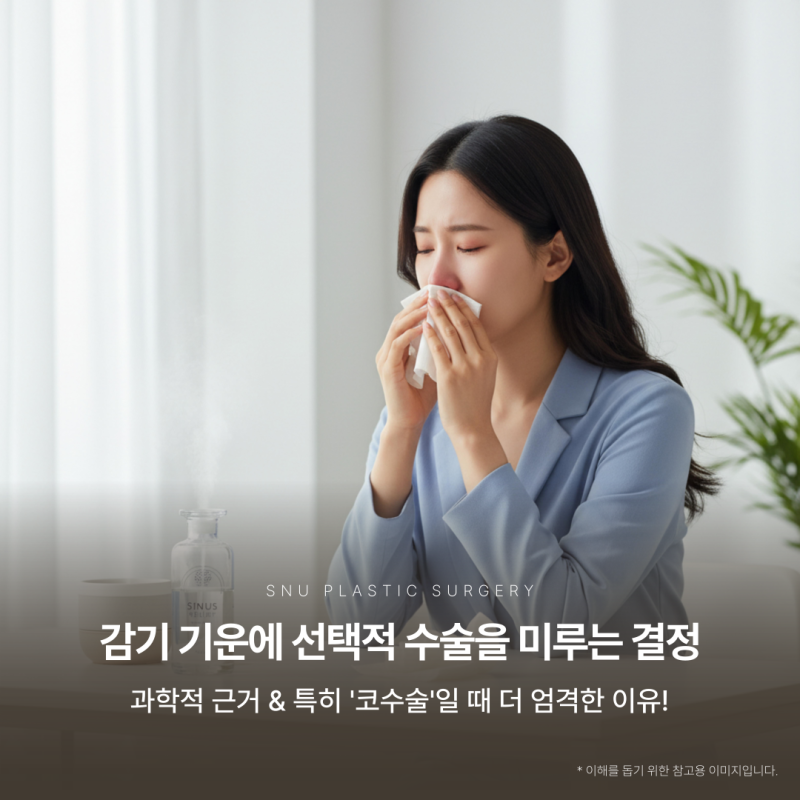
Is Sedation Anesthesia Safe? Medical Reasons Why Surgery is Dangerous When You Have a Cold
Hello.
This is SNU Plastic Surgery.
Today, I'd like to explain in detail
the precautions you should take if you have
cold symptoms before surgery.
I only have a cold, so wouldn't it be fine if the anesthesia is administered properly?
However, there are solid reasons
why medical staff recommend postponing surgery,
all for the patient's safety.
Many patients feel disappointed when they develop
mild cold symptoms before a scheduled elective surgery
(a planned surgery, not an emergency) that they've waited a long time for.
However, anesthesiologists and surgeons generally
consider cold or respiratory infection symptoms a significant risk signal
and prioritize postponing surgery.
This is not just a simple precaution, but a scientific and responsible decision
to significantly reduce the risk of complications.
1. Reasons why even sedation anesthesia is not safe
Many people mistakenly believe that ‘sedation anesthesia’
is lighter and safer than general anesthesia.
However, the medically accurate term is conscious sedation,
and even in this state, respiratory infections are a significant risk factor.
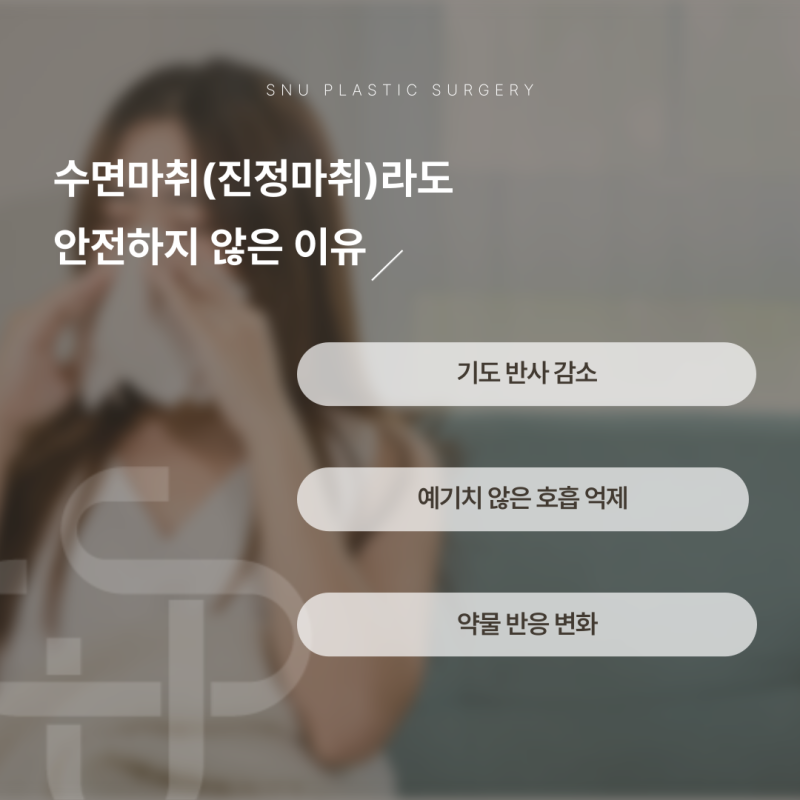
⚠️ Reduced Airway Reflexes
When sedatives are administered, protective airway reflexes
like coughing and swallowing are naturally suppressed.
At this time, mucus secretion increases in an inflamed airway,
increasing the risk of this secretion entering (aspirating into) the lungs.
⚠️ Unexpected Respiratory Depression
An airway that is already swollen and narrowed due to a cold
becomes more vulnerable to the secondary respiratory depressive effects of sedatives,
which can lead to a rapid drop in oxygen saturation.
⚠️ Changes in Drug Response
In an inflammatory state, the body's response to anesthetic and sedative drugs
becomes unpredictable, posing a risk of falling into a deeper state of sedation than necessary.
📍 In conclusion, when there are respiratory problems,
the concept of ‘light anesthesia’ itself does not apply,
and all forms of anesthesia and sedation carry risks.
2. Reasons why cold symptoms are particularly dangerous during ‘rhinoplasty (nose surgery)’
Nose surgery directly involves the nasal cavity, which is the center of the respiratory system.
Therefore, if you have cold or allergic rhinitis symptoms,
it goes beyond simple anesthesia risks and directly
negatively impacts the surgical outcome itself.
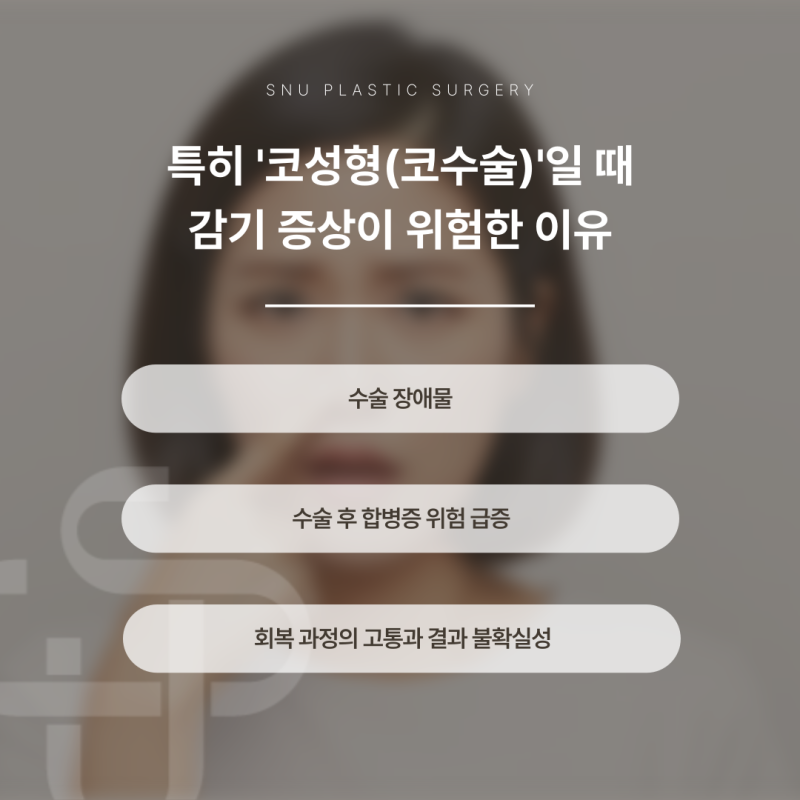
⚠️ Surgical Obstacles
Nasal congestion, abundant runny nose, and mucosal swelling
significantly limit the surgeon's visibility and working space.
This reduces the accuracy of plastic surgery, where precise manipulation is essential,
and can lead to unexpected results.
⚠️ Greatly Increased Risk of Post-Surgical Complications
Surgery performed in an inflamed state will result in much more severe
swelling and pain in the internal nasal tissues, and the duration will be longer.
Furthermore, the risk of infection significantly increases, which in severe cases
can cause displacement or deformation of implants (such as silicone).
⚠️ Suffering during Recovery and Uncertainty of Results
If the naturally occurring nasal congestion after surgery overlaps with cold symptoms,
the patient will experience extreme respiratory discomfort.
Severe swelling makes it difficult to predict the final shape of the nose
and increases the possibility of complications such as adhesions.
In other words, pre-existing inflammation becomes a major variable
that threatens the ‘results’ and ‘satisfaction’ of the surgery.
3. Risk Factors: How Cold Symptoms Affect Anesthesia and Surgery
In summary, cold symptoms pose the following risks:
👉🏻 Respiratory Complications
Life-threatening laryngospasm, impaired oxygen supply, increased risk of pneumonia
👉🏻 Increased Anesthesia Risk
Increased unpredictability in all types of anesthesia, including sedation anesthesia
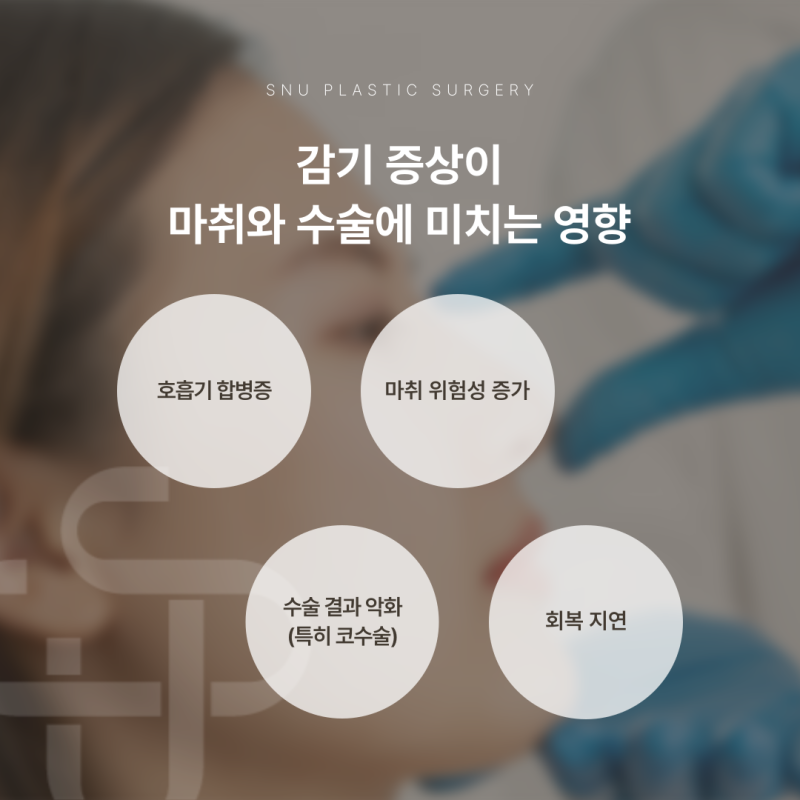
👉🏻 Worsened Surgical Outcomes (especially for rhinoplasty)
Reduced surgical precision, increased post-operative infection, swelling, and pain,
potential for deformation of the outcome
👉🏻 Delayed Recovery
Slower recovery rate of the general condition and surgical site
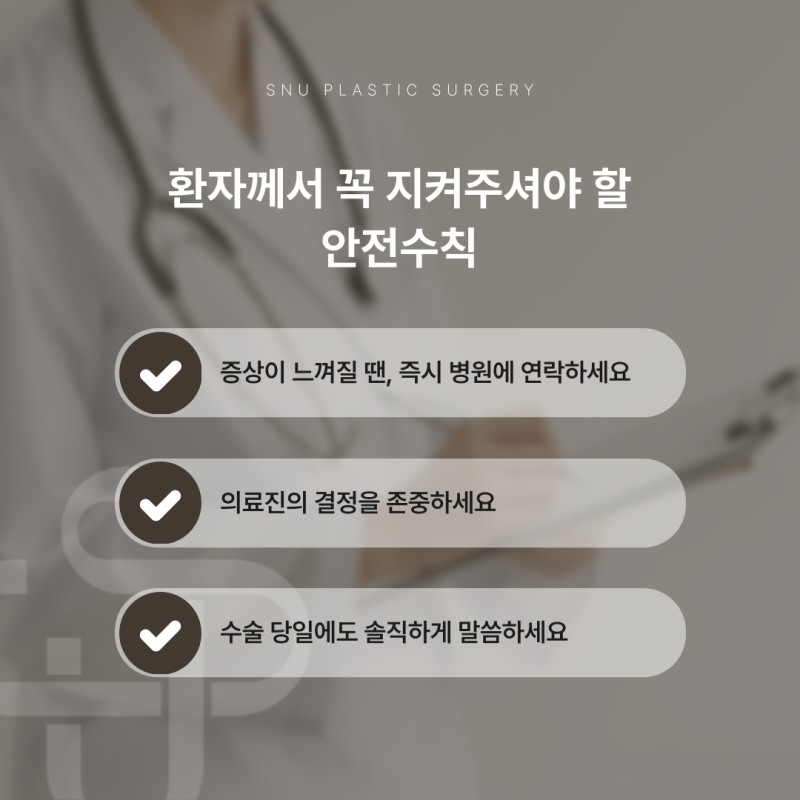
4. Safety Rules that Patients MUST Follow!
If you experience any symptoms such as nasal congestion, runny nose, cough, sore throat,
body aches, or fever as your surgery date approaches,
✅ Contact the hospital immediately
It is important to clearly state, ‘I have a cold and am scheduled for nose surgery.’
✅ Respect the medical team's decision
The recommendation to postpone is not for inconvenience,
but a necessary procedure to ensure the safety and success rate of the surgery.
✅ Be honest even on the day of surgery
Even if your symptoms have improved on the morning of the surgery,
you must inform the anesthesiologist about your symptom history from the past few days.
The first step towards safe beauty:
When medical staff postpone surgery due to cold symptoms,
it is an attitude to take responsibility for the shape and health you will have for a lifetime,
rather than short-term schedule inconvenience.
Especially for nose surgery, it is not just a simple cosmetic procedure
but also involves a significant process of changes in respiratory function.
Please remember that receiving surgery in optimal condition
is the shortest path to the most beautiful and safest results🙏🏻
Homepage
📌 KakaoTalk Channel (Click image below to go)