2026-07-21
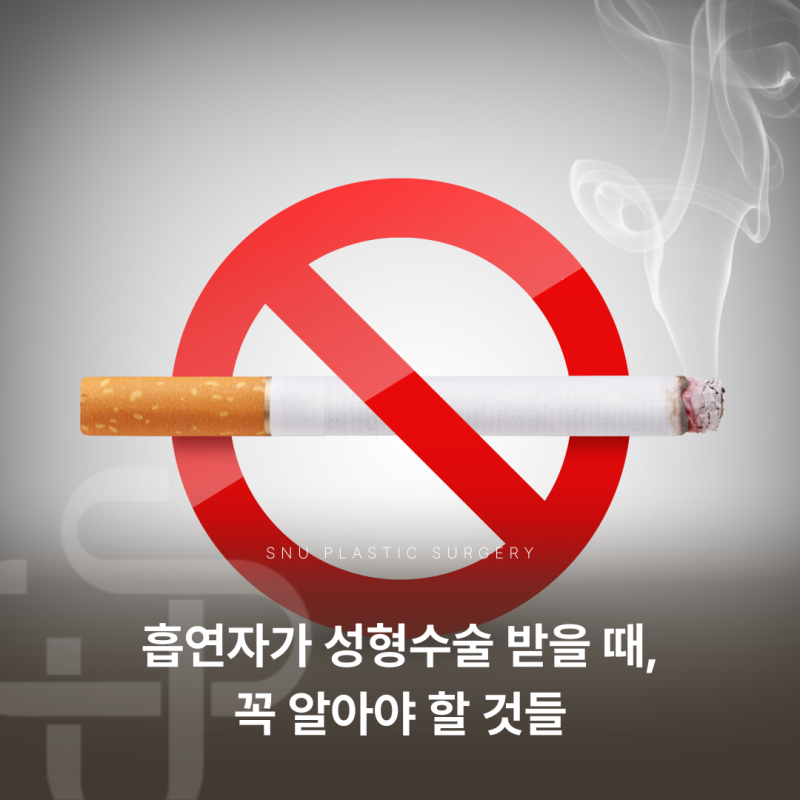
Important Precautions for Smokers Undergoing Cosmetic Plastic Surgery!
Smokers considering cosmetic surgery must understand the risks and importance of quitting. Nicotine impairs healing, increases infection risk, and can cause complications. Quitting at least 4 weeks before and 2-4 weeks after surgery is crucial for safety and optimal results.

Hello,
This is Dr. J from Cheongdam SNU Plastic Surgery Clinic.
Today, I'm providing essential information
that smokers considering cosmetic plastic surgery
must know.
This is a crucial guide for successful surgery
and rapid recovery.
What Smokers Need to Know When Undergoing Cosmetic Plastic Surgery
For successful surgery and beautiful results,
quitting smoking is not an option, but a necessity.
Chronic smokers contemplating cosmetic surgery
might be curious about the impact of nicotine
on surgery and recovery.
As you might expect, smoking directly hinders
wound healing at the surgical site
and increases the risk of respiratory complications
during anesthesia.
Thorough preparation is required
for safe surgery and beautiful results.
Why is Smoking Dangerous for Plastic Surgery?
⚠️ Oxygen Supply Blockage and Vasoconstriction
Nicotine constricts blood vessels,
blocking the flow of blood and oxygen.
If nutrients and oxygen are not adequately supplied
to the surgical site,
wound healing slows down significantly.
⚠️ Impaired Collagen Production
Smoking reduces collagen production in the body.
Collagen is an essential component for wound healing
and skin recovery. A lack of collagen can increase the risk
of prominent or unsightly scars.
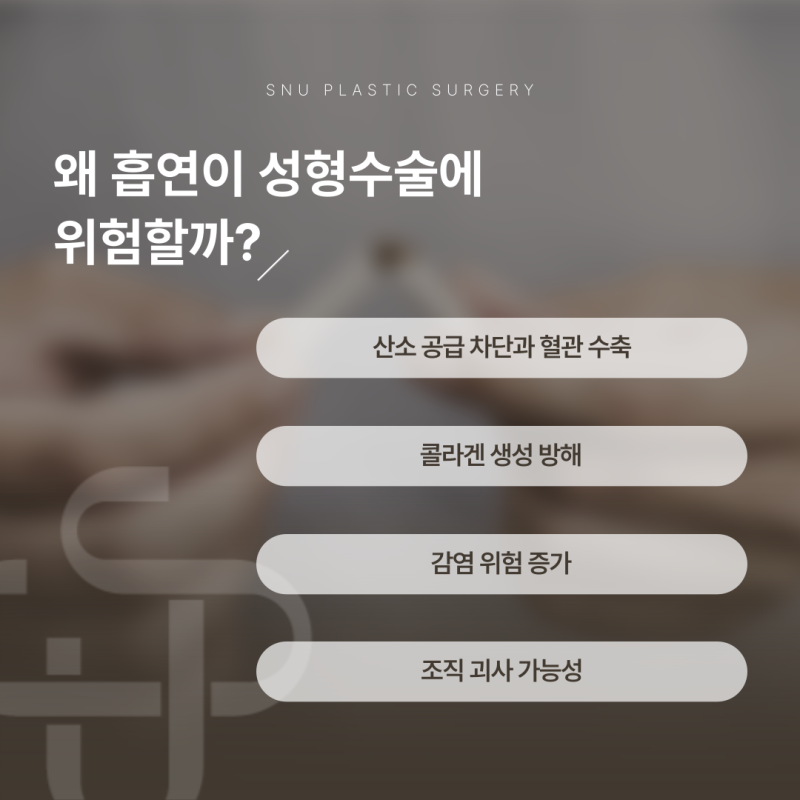
⚠️ Increased Risk of Infection
If blood flow to the surgical site is not smooth,
immune cells may not reach it sufficiently,
increasing the risk of wound infection.
⚠️ Potential for Tissue Necrosis
Especially in surgeries involving skin manipulation
(e.g., facelift, skin graft, liposuction),
smoking can cause a complication called ‘necrosis’,
where the skin at the surgical site turns black
and dies off.
Respiratory Issues and Lung Complications During Anesthesia

⚠️ Decreased Lung Function
Smoking chronically weakens the airways
and lung function.
Stimulation from the breathing tube inserted during anesthesia
can lead to severe coughing, which may cause wounds to open
or create uncontrollable situations.
⚠️ Increased Risk of Complications
Smokers are much more likely than non-smokers
to develop respiratory complications after surgery,
such as pneumonia or atelectasis (a collapsed lung).
Before and After Surgery, How Long Should One Quit Smoking?
✅ Minimum Recommended Period
Ideally, it is best to quit smoking at least 4 weeks
before surgery.
This helps normalize oxygen supply to tissues
and eliminate the vasoconstrictive effects of nicotine.
✅ Cases Requiring Longer Abstinence
For surgeries involving bones
(e.g., limb lengthening, bowleg correction) or
major tissue reconstruction,
doctors recommend quitting smoking 6 months prior
and continuing abstinence until the bones are fully healed
(approximately 6 months) after surgery.
✅ Absolute Abstinence Period
During the post-operative recovery period,
one must abstain from smoking for at least 2 to 4 weeks or more.
Many doctors state that quitting smoking for 1 month after surgery
significantly reduces the risk of complications.
Precautions for Smokers Undergoing Cosmetic Surgery
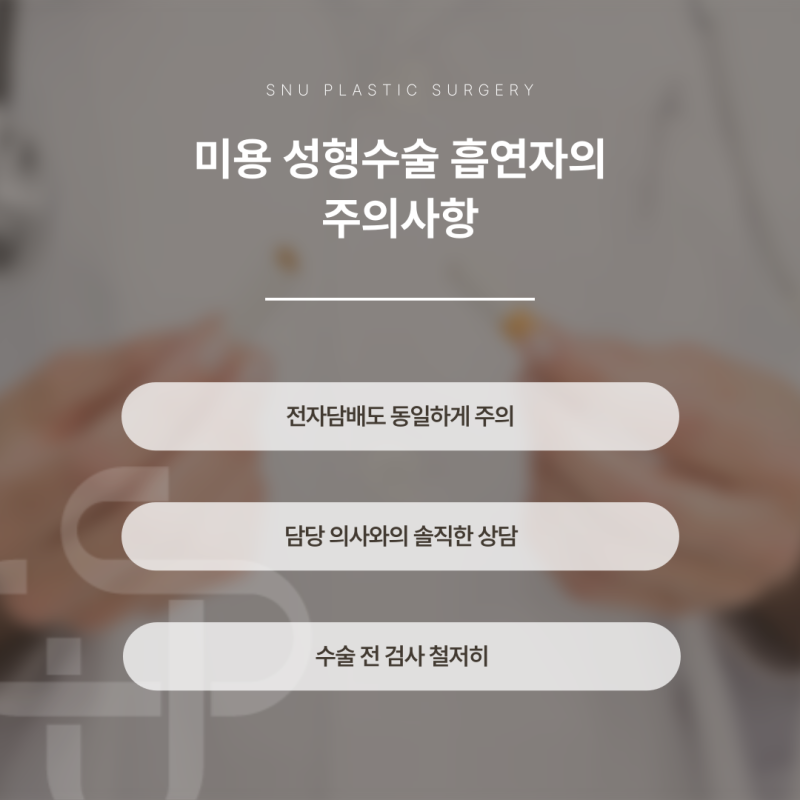
✅ E-cigarettes are no different.
The idea that ‘they are less harmful because they contain no tar’
is dangerous.
E-cigarettes also contain nicotine,
causing the same problems such as vasoconstriction.
Be careful, as daily use might lead to a higher
nicotine intake.
✅ Honest Consultation with Your Doctor
Before surgery, you must inform your doctor
about your smoking habits and the duration of your abstinence.
This is crucial information for the doctor to adjust
the surgical plan and anesthesia method.
✅ Thorough Pre-operative Examinations
It is advisable to undergo basic pre-operative tests,
such as lung function tests,
to check the condition of your lungs.
Frequently Asked Questions (FAQ)
Q: How long before surgery should I quit smoking?
A: Ideally, it is best to quit 4 weeks before surgery.
However, for any surgery, quitting is better than not quitting.
Quitting even a day earlier will help with recovery.
Q: When can I smoke after surgery?
A: You should abstain from smoking until the sutures are removed
and the wound is stable (usually 2-4 weeks).
However, for complete recovery and optimal final results,
it is best to quit entirely at this opportunity.
Q: Are e-cigarettes okay?
A: No.
E-cigarettes also contain nicotine, causing vasoconstriction
and reduced tissue oxygen supply, leading to similar risks as regular cigarettes.
Cosmetic surgery is more than just enhancing one's appearance;
it is a significant intervention on the body.
Beautiful results and safety stem from thorough preparation.
Please remember that quitting smoking is the most basic
and essential preparation for the success and safety of your surgery.
Website
📌 KakaoTalk Channel (Click image below to go)