2026-07-21
Fillers: Will They Stay in Place? The Truth from a Doctor
Many believe fillers stay put, but they actually move due to facial muscle activity, circulation, and enzyme breakdown. Learn why fillers move and how to get a safe treatment.


Hello.
This is SNU Plastic Surgery.
Many people think,
‘The filler injected into my face will just stay put.’
However, the reality is quite different.
Your face is
a living, moving space.
Unless it’s stitched or nailed in place,
a gel-like substance injected with a syringe
cannot possibly remain perfectly still in one spot.
Today, we’ll explain why fillers move
and how to receive them safely,
in an easy-to-understand manner!
Why do fillers move on their own?
Based on research from academic journals and numerous
clinical experiences,
fillers cannot escape these three forces:
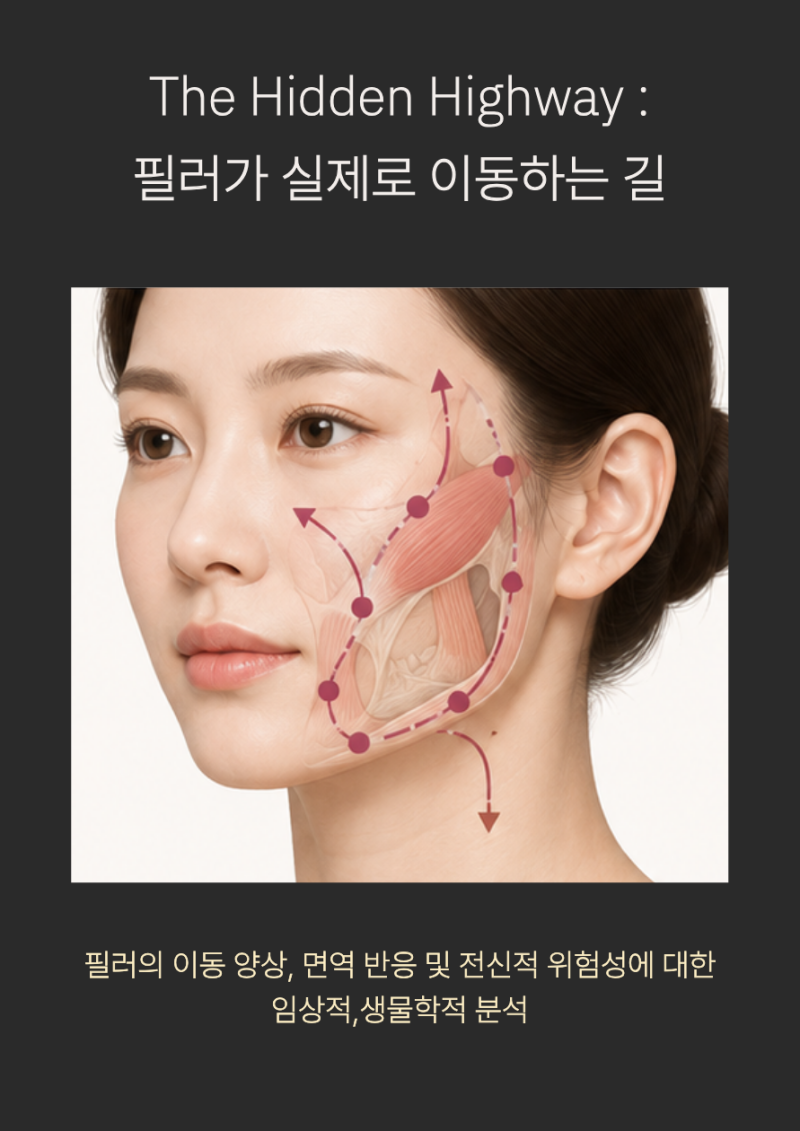
1. Facial muscles are constantly moving
Every time you smile, speak, or frown,
over 40 facial muscles
push and pull the filler.
According to specialists,
this repetitive pressure
gradually displaces the filler
over several months to years.
2. Blood flow and lymphatic circulation push it
Our bodies continuously circulate fluids.
Tiny filler particles or decomposed components
can travel along this flow.
Several imaging studies have even reported cases where fillers
migrated to surrounding lymph nodes.
3. Enzymes in the body weaken the filler
Hyaluronic acid fillers,
often called ‘dissolvable fillers,’
are gradually broken down by enzymes in the body.
As they break down, their structure weakens,
making them more susceptible to being pushed by muscle movements
or circulation.
💡Important point:
All types of fillers that create volume
are not exempt from this rule.
However, very light skin booster types
that completely disappear within a few weeks
are excluded from this discussion.
Permanent fillers are more dangerous – because they don’t disappear even if they move

Non-absorbable permanent fillers
(such as silicone, PMMA, etc.)
present a much more serious situation.
According to clinical cases from specialists,
there are many instances where these substances have migrated
from the face to the jawline, neck, and even lymph nodes around the eyes
over several years.
The problem is that they don’t disappear.
In the areas where they move, they cause chronic inflammation,
bumpy nodules, and deformities,
and removal is almost impossible.
For these reasons, most permanent fillers
have already disappeared from the market.
💡Conclusion:
All fillers can move.
The less absorbable the filler,
the more catastrophic its movement can be.
So, are filler procedures scary? – 4 principles for safe treatment
Not at all.
Fillers are an excellent procedure.
However, they must be approached in a way that respects
their characteristic as a ‘moving substance.’
📍 Principle 1.
Remember that fillers are for ‘volume’
Fillers fill space and create volume.
Requests like “completely change my contour,
lift it up”
are closer to the realm of surgery.
Lifting effect is merely a side effect of volume,
don’t be swayed by advertising claims.
📍 Principle 2.
Don’t inject too much from the start
Considering that fillers move and spread,
injecting a large amount from the beginning
to achieve a ‘perfect shape’ is risky.
We recommend starting with the minimum dose, observing the progress
over time, and adding more if necessary.

📍 Principle 3.
Choose a filler with an antidote
Hyaluronic acid (HA) fillers
can be immediately dissolved with an antidote (hyaluronidase)
if problems arise.
It is the only filler that can be safely
managed even in emergency situations.
Non-absorbable fillers are not recommended.

📍 Principle 4.
Receive treatment from a plastic surgeon who understands ‘movement’ and anatomy well
Ensure that the practitioner accurately understands facial muscles, blood vessels, and lymphatic flow.
Especially among plastic surgeons,
a doctor with extensive anatomical knowledge
can provide greater peace of mind.
During consultation, ask this:
‘Do you believe fillers can move?
What techniques do you use to prevent that?’
If the doctor can answer specifically,
you can trust them with your treatment.
Understanding movement allows for more natural use
Fillers are not wooden pegs.
They are biomaterials that subtly react
within a living, moving face.
Accepting this fact can lead to more natural
and safer results.
✅ Start with a minimum amount,
and add slowly.
✅ Always choose a dissolvable
HA filler.
✅ Find a plastic surgeon who is well-versed in anatomy and understands ‘movement’.
✅ Do not expect perfect fixation.

Filler procedures are not scary.
If you understand them properly and choose wisely,
they can bring about beautiful changes😊
*This article is medical information compiled from various academic journals and clinical opinions of specialists,
and does not replace individual consultation.
Homepage
📌 KakaoTalk Channel (Click image below to go)



Frequently Asked Questions
Why do fillers move from the treatment area?
Fillers can move from the treatment area due to continuous facial muscle movement, blood flow and lymphatic circulation, and decomposition by enzymes in the body. These complex factors push the filler or weaken its structure, causing migration.
Can all types of fillers move?
Yes, all types of fillers that create volume can move. However, light skin booster types that completely disappear within a few weeks are excluded from this discussion. Non-absorbable permanent fillers are more dangerous because they do not disappear even if they move.
Are permanent fillers safe?
No, permanent fillers are not safe. Non-absorbable permanent fillers can cause severe side effects such as chronic inflammation, nodules, and deformities if they migrate, and removal is almost impossible. For these reasons, most permanent fillers have already disappeared from the market.
What are the principles for safe filler treatment?
For safe filler treatment, four principles must be followed. It is important to remember that fillers are for volume, not to inject too much from the start, to choose hyaluronic acid fillers with an antidote, and to receive treatment from a plastic surgeon with extensive anatomical knowledge.
Which filler is the safest to choose?
Choosing hyaluronic acid (HA) fillers with an antidote is the safest. If a problem occurs, it can be immediately dissolved with an antidote (hyaluronidase), making it the only filler that can be safely managed even in emergency situations.