2026-07-21
Cosmetic Plastic Surgery for Seniors: Checklist and Precautions!
Considering cosmetic surgery as a senior? This guide covers essential pre-surgery checks, safe procedure options, and post-operative care for a natural, healthy look.

Cosmetic Plastic Surgery for Seniors: Checklist and Precautions!

Hello,
This is Dr. J from Cheongdam SNU Plastic Surgery Clinic.
In modern society,
there's a growing trend of senior patients, even those over 70,
seeking cosmetic plastic surgery to boost their confidence
and lead more vibrant social lives.
However, for senior patients,
special precautions are necessary
due to anesthesia risks and delayed wound healing.
In this article,
I will explain the considerations senior patients should check
when contemplating cosmetic plastic surgery,
as well as safe treatment options.
Essential Pre-Surgery Checklist for Senior Patients
For senior patients to safely undergo cosmetic plastic surgery,
the following points must be carefully reviewed:
1. Assessment of Overall Health
☑ Check for chronic diseases
Evaluate the presence and control status of underlying conditions such as high blood pressure, diabetes, and heart disease.
These conditions can increase anesthesia risks and delay recovery.
☑ Review of medications being taken
Anticoagulants (blood thinners), for example, require adjustment before and after surgery,
which should be discussed with an anesthesiologist.
☑ Nutritional status assessment
Nutritional imbalances are common in the elderly, directly affecting wound healing.
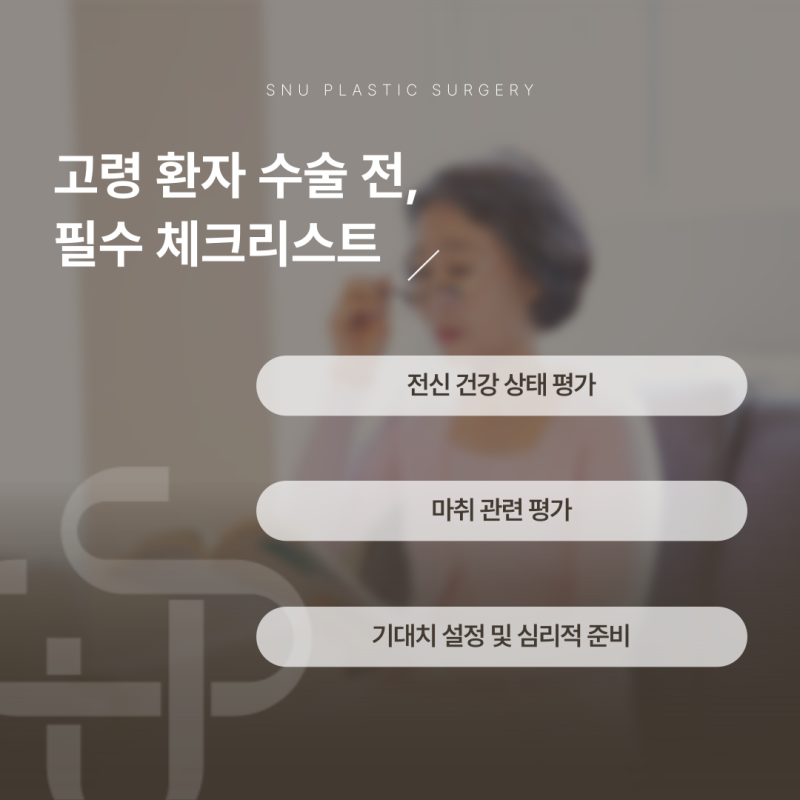
2. Anesthesia-Related Assessment
☑ Anesthesia method decision
For seniors, local anesthesia may be preferred
over conscious sedation or general anesthesia.
Drugs like midazolam can reduce psychological burden due to their memory-loss effect,
but dosage adjustment is essential in the elderly due to slower metabolism.
☑ Respiratory function assessment
It's important to check for decreased respiratory function due to aging and the presence of sleep apnea.
3. Setting Expectations and Psychological Preparation
☑ Setting realistic goals
Cosmetic surgery for senior patients should focus on ‘looking natural and healthy’ rather than ‘looking young’.
Overly aggressive surgery can lead to unnatural results.
☑ Communication with the medical team
It is crucial to thoroughly discuss expectations for the surgical outcome with the medical team
and understand the possible results and limitations.
# Precautions for Senior Patient Surgery
📍 Anesthesia risks
Elderly patients have a higher risk of unexpected complications during anesthesia
due to decreased bodily functions.
Particular attention is needed for respiratory depression and blood pressure fluctuations.
📍 Delayed wound healing
Aged skin has reduced regenerative capacity, leading to slower wound healing and a higher risk of infection.
This risk further increases in cases of diabetes or nutritional imbalance.
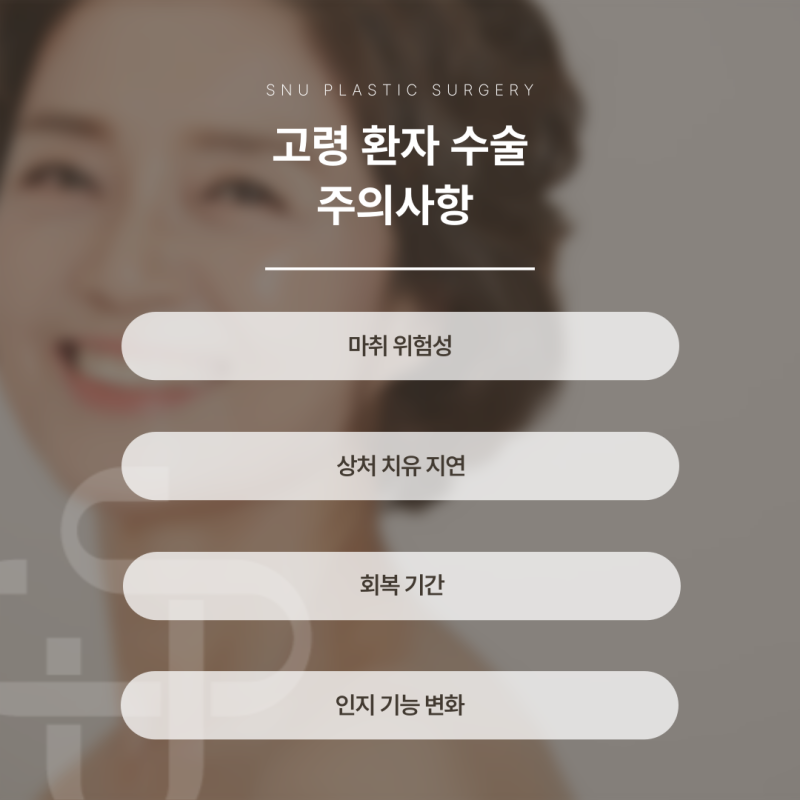
📍 Recovery period
Recovery may take longer than for younger patients,
and during this time, movement restrictions or special care may be required.
📍 Changes in cognitive function
In senior patients, delirium or temporary cognitive decline can occur after surgery,
making post-operative care crucial.
# Recommended Procedures for Seniors
It is preferable to achieve natural improvement effects
through minimally invasive procedures rather than extensive surgeries.
📌 Non-surgical procedures
1) Botox and fillers
Effective for improving deep wrinkles such as expression lines or nasolabial folds.
Less burdensome than surgery and with a shorter recovery period, making them suitable for senior patients.
2) Laser treatment
Can help improve skin elasticity and pigmentation.
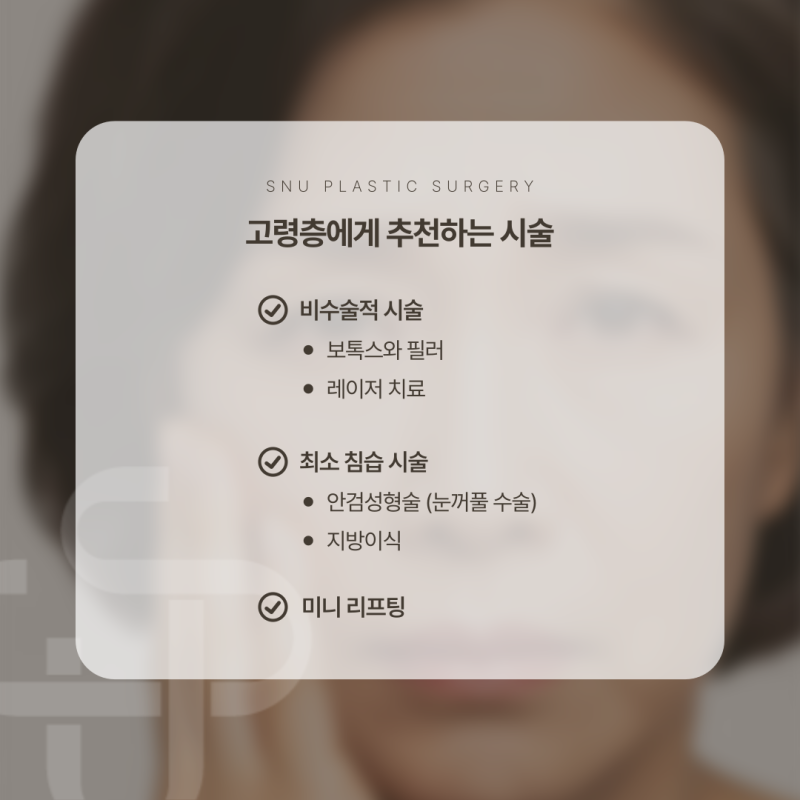
📌 Minimally invasive surgery
1) Blepharoplasty (eyelid surgery)
Provides functional improvement by alleviating narrowed vision due to drooping eyelids or discomfort from periorbital skin.
The surgical scope is relatively small, making it applicable to senior patients.
2) Fat grafting
A method to restore natural volume by filling in sunken areas of the face.
Since one's own fat is used, the risk of rejection is low.
📌 Mini-lifting
Instead of a full facelift, a mini-lifting provides appropriate tightening,
reducing burden and achieving natural results.
# Post-Surgery Management Tips
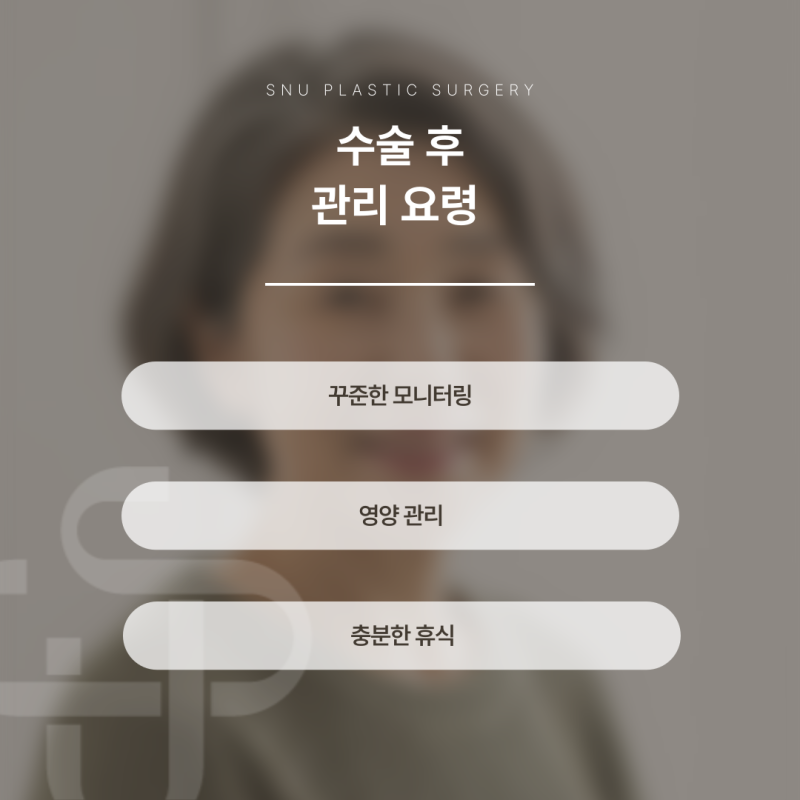
✅ Consistent monitoring
Careful observation for the possibility of post-operative complications is necessary.
✅ Nutritional management
A diet rich in protein and vitamins plays an important role in wound healing.
✅ Sufficient rest
Avoiding strenuous activities and getting adequate rest helps with recovery.
# Safe Choices for Natural Beauty
When senior patients over 70 consider cosmetic plastic surgery,
safety must be the top priority.
It is advisable to have thorough consultations with a specialist to assess health status and expectations,
and choose procedures that can achieve natural results with minimal invasiveness.
Cosmetic plastic surgery is a tool to enhance quality of life,
but a cautious approach is particularly needed for senior patients.
Based on transparent communication with the medical team and realistic expectations,
senior patients can also achieve satisfactory results and lead more vibrant lives.
Aging is the law of nature,
but maintaining a naturally and healthily beautiful appearance
is a gift that modern medicine can offer.
Always prioritize safety!
Homepage
📌 KakaoTalk Channel (Click image below to go)