2026-07-21
Apgujeong Upper Blepharoplasty: Regaining Function with Minimal Side Effects
Learn about upper blepharoplasty in Apgujeong, addressing age-related eyelid sagging. Understand the difference between upper eyelids and ptosis, potential side effects, and when medical insurance may apply for functional improvements.

Hello. This is SNU Plastic Surgery Clinic, providing upper blepharoplasty consultations in Apgujeong.
When considering what appears first as we age, I objectively thought of wrinkles. Wrinkles are often the first sign that one has 'gotten a bit older'.
While wrinkles can be semi-permanently improved through non-surgical methods, one aging process that is difficult to improve non-surgically is 'upper blepharoplasty'.
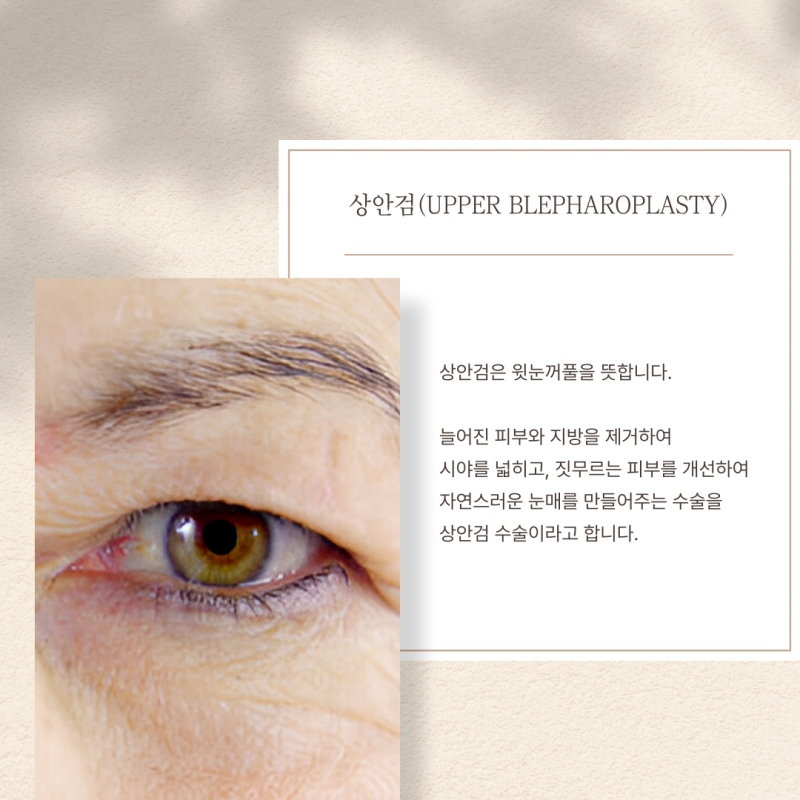
Upper Eyelid (Upper Blepharoplasty)
The term 'upper blepharoplasty' refers to the upper eyelid.
Conversely, 'lower blepharoplasty' refers to the lower eyelid. It's not a disease name but refers to the upper eyelid, specifically the area near the double eyelid crease.
This structure protects our eyes, helps us blink, and plays a crucial role in keeping the eyeballs moist. However, as we age, just like sagging cheeks or submental fat, the upper eyelids also tend to sag.
Depending on the individual, even within the same age group, some may not experience sagging, while others may have mild or severe sagging.
In cases of severe sagging, it's not just a cosmetic issue but can also lead to obstructed vision, fatigue, and psychological stress.

Therefore, when the condition progresses from being purely for cosmetic purposes to also involving functional issues, improvement is naturally necessary to restore normal function.
At SNU Plastic Surgery Clinic, which performs upper blepharoplasty in Apgujeong, we recommend surgical methods that offer longer-lasting results than typical cosmetic procedures. Generally, clients also prefer surgical methods as the most fundamental solution, rather than non-surgical ones.
At our clinic, when vision is obstructed due to upper eyelid sagging, rather than directly addressing the upper eyelid, a surgical method involving lifting the eyelid using the levator palpebrae superioris muscle (eyelid-lifting muscle) is often required.
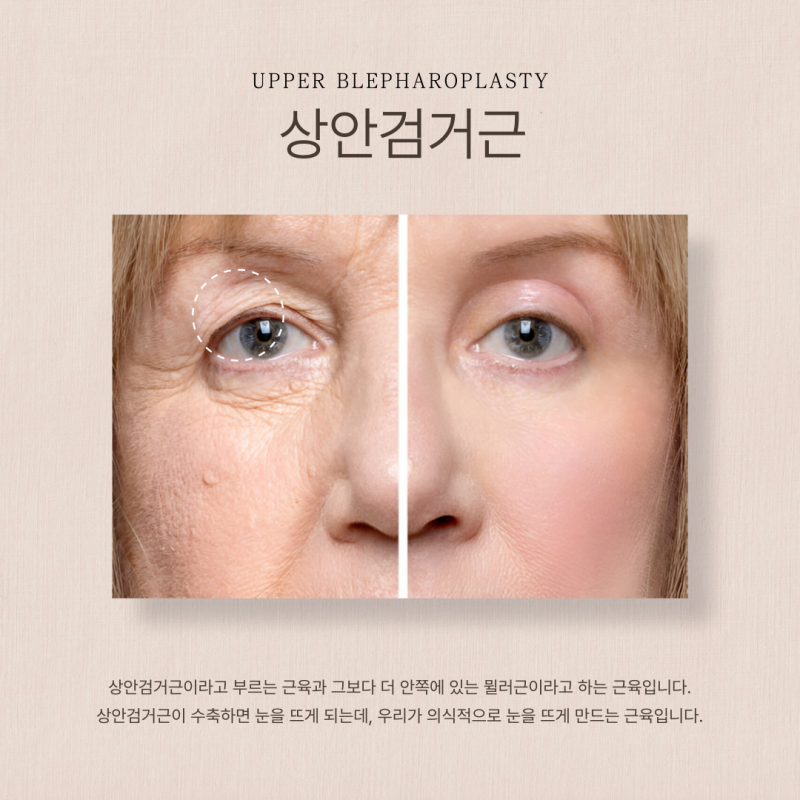
Ptosis
Ptosis is related to the upper eyelid, where 'upper blepharoplasty' refers to the upper eyelid itself, and 'ptosis' refers to the drooping of the eyelid.
So, 'upper eyelid ptosis' means drooping of the upper eyelid, and 'lower eyelid ptosis' means drooping of the lower eyelid. People often misunderstand that upper blepharoplasty and ptosis are different, and while they are distinct terms, both ultimately refer to a problem with the eyelid.
In other words, upper blepharoplasty can be seen as eyelid surgery, and ptosis as eyelid drooping surgery. The levator palpebrae superioris muscle is, when fully explained, the eyelid-lifting muscle.
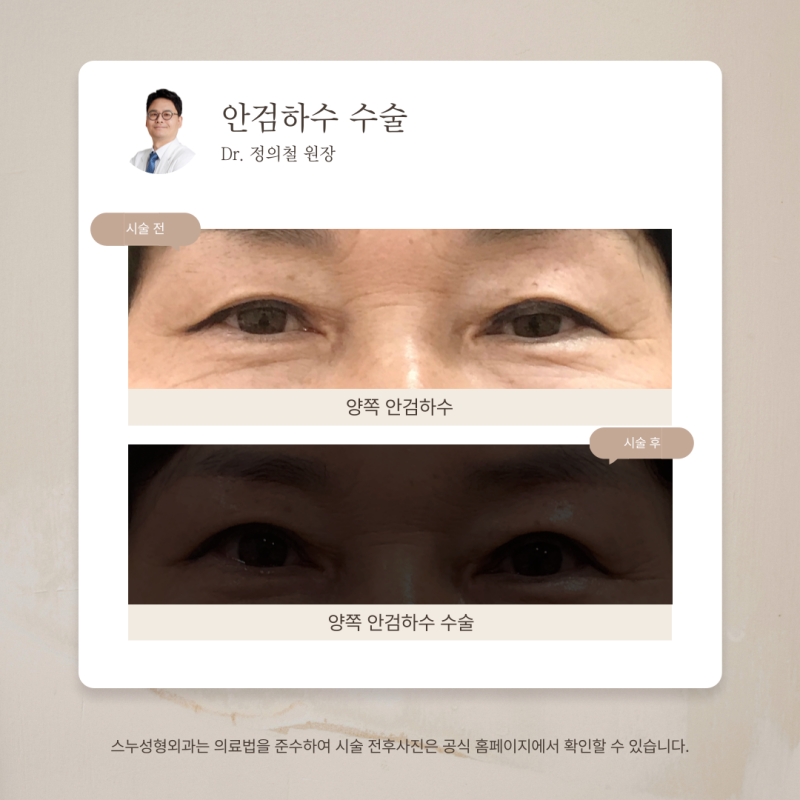
While this is mostly a process that occurs due to aging, it can also arise from various causes such as neurological diseases or systemic diseases. Therefore, to properly correct ptosis, eye shape correction or levator palpebrae superioris muscle shortening surgery must be applied.
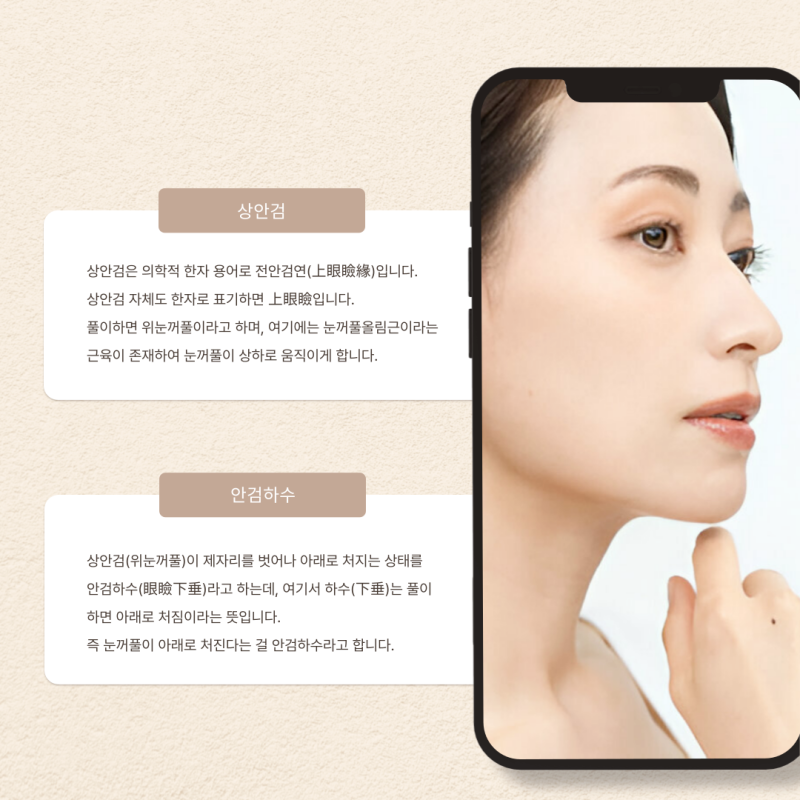
In conclusion, since upper eyelid sagging not only causes cosmetic loss but also functional loss, many individuals who need upper blepharoplasty do so for cosmetic reasons.
In such cases, the surgery may not be covered by medical insurance. However, if an older individual's upper eyelid condition is severely sagged and classified as ptosis, they can receive guidance on medical insurance coverage for improving functional problems through consultation.
Our clinic also provides treatments covered by medical insurance, which are not commonly offered at general plastic surgery clinics. Therefore, clients curious about which treatments are covered by medical insurance can refer to our website.

What if ptosis is left untreated?
Those who feel that leaving ptosis untreated does not affect their daily life may choose to do so.
It's not that improvement through medical facilities is unnecessary, but for individuals with active lifestyles, clear vision is essential. Therefore, we assist them in establishing a proper treatment plan through consultation with Dr. Eui-chul Jung of SNU Plastic Surgery Clinic to achieve desired results.
If it doesn't affect one's life at all, some people neglect it. However, if ptosis is left untreated, problems such as restricted vision, eye fatigue, neck and spinal issues, aesthetic concerns, and social discomfort can arise.
What are the side effects of upper blepharoplasty?
As we know, the eyelids are composed of very thin skin layers and must be handled with extreme care.
Therefore, it is an area where surgery should not be rushed but performed meticulously, even if it takes a long time. Consequently, many plastic surgery clinics nationwide have reported a considerable number of side effects from upper blepharoplasty.
Side effects of upper blepharoplasty occur after surgery and are broadly categorized into cosmetic and functional side effects. Cosmetic side effects include swelling, bruising, pain and discomfort, dry eyes, and scarring.

Functional side effects can include asymmetry of both eyelids, eyelids lifted too much due to excessive surgery, conversely, little to no improvement in eyelid drooping, difficulty closing the eyes, and corneal damage.
Additionally, unnatural double eyelids, sensory abnormalities, pain due to nerve damage, or even slight bleeding can be considered functional side effects.
If any of these cosmetic or functional side effects persist for more than a week after surgery, you should revisit the hospital. SNU Plastic Surgery Clinic is led by Dr. Eui-chul Jung, who has extensive surgical experience, so you can visit us if you seek satisfaction from a single surgery.
















Frequently Asked Questions
What does 'upper blepharoplasty' mean?
Upper blepharoplasty refers to the upper eyelid. It is an important area that protects the eyes, helps with blinking, and keeps the eyeballs moist.
Why do upper eyelids sag with age?
As we age, just like sagging cheeks or submental fat, the upper eyelids also tend to sag as part of the aging process. The degree of sagging can vary among individuals.
What problems can arise from severe upper eyelid sagging?
Severe upper eyelid sagging can lead to not only cosmetic issues but also various functional problems such as obstructed vision, eye fatigue, neck and spinal issues, psychological stress, and social discomfort.
Are 'upper blepharoplasty' and 'ptosis' the same thing?
No. 'Upper blepharoplasty' refers to the upper eyelid, while 'ptosis' means eyelid drooping. Thus, 'upper eyelid ptosis' refers to drooping of the upper eyelid. Upper blepharoplasty can be considered eyelid surgery, and ptosis surgery can be considered eyelid drooping surgery.
What are the potential side effects after upper blepharoplasty?
After upper blepharoplasty, cosmetic side effects such as swelling, bruising, pain, dry eyes, and scarring can occur. Functional side effects may include asymmetry of both eyelids, excessive eyelid lift, difficulty closing the eyes, corneal damage, and unnatural double eyelids.
Is medical insurance applicable for upper blepharoplasty?
Yes, it may be. If an older individual's upper eyelid condition is severely sagged and classified as ptosis, they can receive guidance on medical insurance coverage for improving functional problems through consultation.