2026-11-04
Anti-Aging Surgery: Why “Looking Like You Did 3 Years Ago for 5–7 Years” Is a Realistic Goal — and Why People in Their 20s and 30s Should Not Rush
The realistic goal of anti-aging surgery is looking like you did 3 years ago, with results lasting about 5–7 years on average. Rushing facial surgery in your 20s or 30s carries risks.


Hello.
This is Snu Plastic Surgery in Cheongdam.
In anti-aging surgery consultations,
many people ask, “How many years younger will I look?”
or “Can I go back to how my face looked 10 years ago?”
Surgery is about turning back the aging clock, not stopping it.

That is why I set the initial goal at
“looking like you did 3 years ago,”
and explain that maintaining that result for an average of 5–7 years
is a realistic expectation.
The medical literature also describes results conservatively, as looking a few years younger than your actual age,
rather than looking like you did 10 years ago.
In the literature on facelifts, the average interval before revision surgery is reported to be around 9–10 years.
However, this does not mean you won’t age at all for 10 years.
Rather, it is closer to the point at which people start considering another procedure.
The rejuvenating effect of a facelift alone is reported to average about 4–6 years,
which falls short of the “10 years younger” some people expect.
※ Results may last differently depending on individual skin condition, the progression of aging, surgical technique, and other factors.
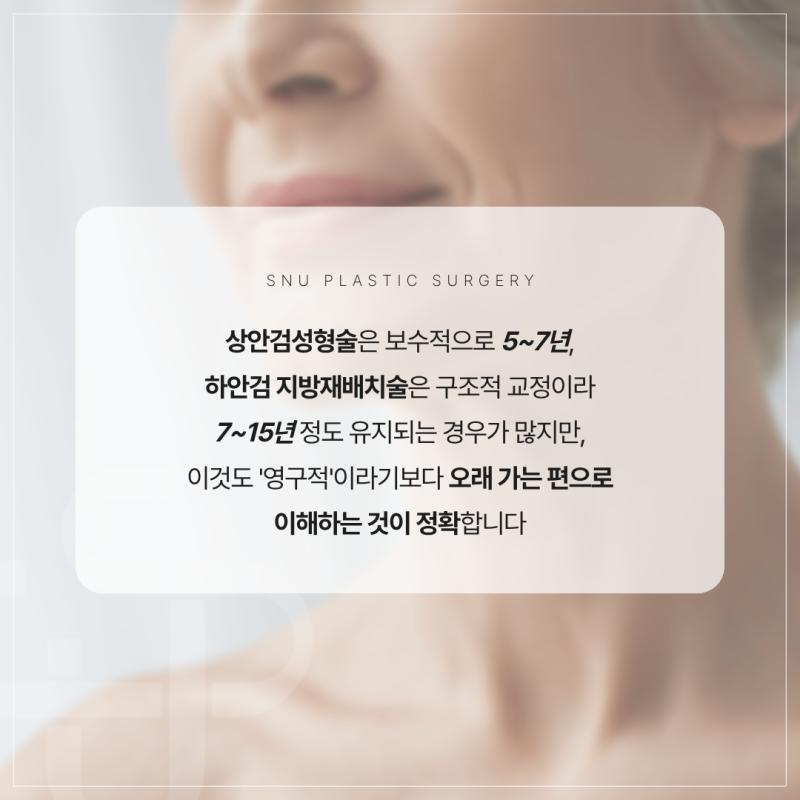
Procedure | Expected Duration | Characteristics |
Upper blepharoplasty | About 5–7 years | A conservative estimate of duration |
Lower blepharoplasty with fat repositioning | About 7–15 years | Relatively long-lasting results through structural correction |
📌 It is more accurate to view these results as long-lasting
rather than permanent.
Why Are Facelifts in Your 20s and 30s High-Risk from the “Aging Clock” Perspective?
The problem is that the earlier you have surgery, the more this “clock” works against you.
A facelift’s effects typically last about 7–10 years.
If it is performed in your 20s or 30s,
✨ there is a risk that your skin will sag again in your 50s, requiring another surgery.
Rather than being a one-time procedure in your youth,
it can become a cycle in which you bear the burden of several surgeries over your lifetime.
📢 [Literature and Specialist Opinion:
Facelift Considerations by Age Group]
Age Group | Key Considerations |
20s | Generally not recommended unless there is a clear reconstructive indication |
30s | Careful evaluation is needed to determine whether the benefits outweigh the risks |
※ Age alone cannot determine whether surgery is appropriate,
and skin condition, the degree of sagging, and surgical risks
must all be considered together.
For this reason, surgery performed too early
can create an imbalance between the pulled deep tissues
and the natural, youthful skin on the surface,
which may instead lead to an unnatural appearance
or accelerated aging.
✨ In addition, facial tissue can only be surgically lifted a limited number of times,
so intervening too early may reduce your future options.
Early recurrence has also been pointed out in the literature as a complication that tends to be under-reported.
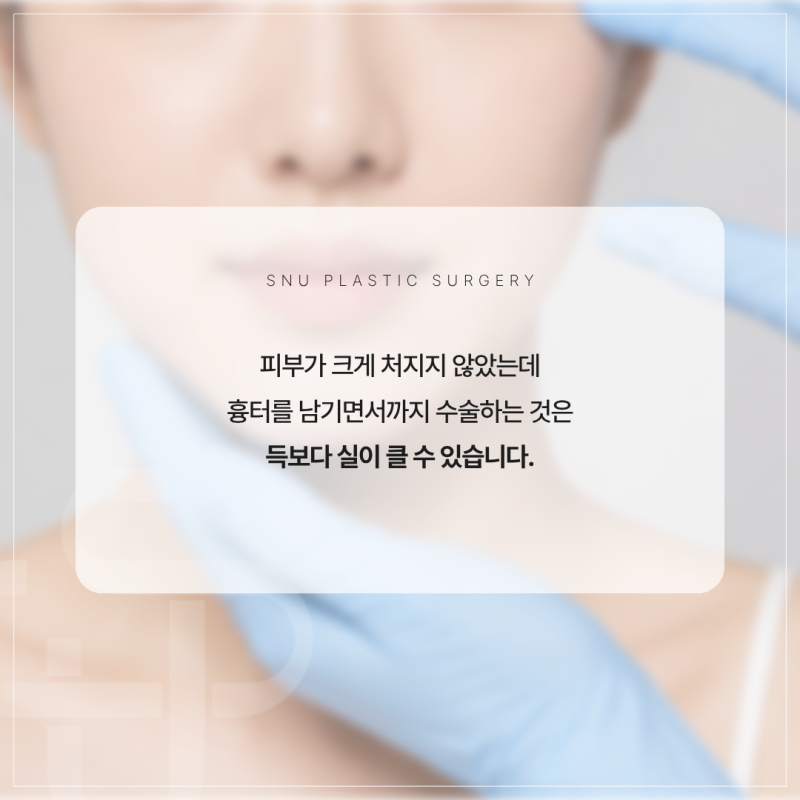
If your skin is not significantly sagging,
undergoing surgery that leaves scars
may do more harm than good.
In fact, there are quite a few cases in which people in their 20s and 30s
rushed into a mini facelift
and ended up needing revision surgery due to side effects or dissatisfaction.
To summarize anti-aging surgery:

The realistic goal of anti-aging surgery is “looking like you did 3 years ago,” with results lasting an average of 5–7 years.
And this clock works against you the younger you are when you have surgery.
For those in their 20s and 30s, non-surgical lifting should be considered before surgery.
Unless it is truly necessary,
waiting until the skin begins to sag noticeably
may be the better choice in the long run.
I believe that explaining this range first during consultations
is a way to build healthy expectations
for both patients and doctors.
Website
📌 KakaoTalk Channel (click the image below to visit)


Frequently Asked Questions
What is the realistic goal of anti-aging surgery?
A realistic initial goal is to aim for looking like you did 3 years ago, with results lasting an average of 5–7 years. This differs from expecting to look like you did 10 years ago. The key point is that surgery turns back the aging clock; it does not stop it.
How long do the results of anti-aging surgery last?
Results vary by procedure. Upper blepharoplasty typically lasts about 5–7 years, while lower blepharoplasty with fat repositioning typically lasts about 7–15 years. Duration can depend on skin condition, the degree of aging, and surgical technique. It is most accurate to view these results as long-lasting rather than permanent.
How much younger can a facelift make you look?
A facelift alone is reported to make people look an average of about 4–6 years younger. This falls short of the “10 years younger” some people expect. The literature conservatively describes the effect as looking a few years younger than your actual age.
On average, how long is it before a facelift needs revision?
The average interval before revision surgery is reported to be around 9–10 years. However, this does not mean you won’t age for 10 years. It is closer to the point at which people typically start considering another procedure.
Is it okay to get a facelift in your 20s or 30s?
For people in their 20s, a facelift is generally not recommended unless there is a clear reconstructive indication. For people in their 30s, careful evaluation is needed to determine whether the benefits outweigh the drawbacks. Age alone is not enough to decide; skin condition, the degree of sagging, and surgical risks must all be considered together.
What should people in their 20s and 30s consider before surgery?
The recommended approach is to consider non-surgical lifting treatments first. Unless surgery is truly necessary, waiting until the skin has started to sag noticeably may be the better long-term choice. Surgery done too early can lead to unnatural results or accelerated aging.