2026-07-21
Skin Rejuvenation PRP: Pros and Cons Comparison | Why I Still Recommend It Today
PRP (Platelet-Rich Plasma) is a scientifically proven treatment that utilizes the body's natural healing mechanisms. This article explains why I continue to recommend PRP for hair loss, dark circles, and fine wrinkles, highlighting its unique advantages over synthetic alternatives.


Hello.
This is Dr. J from Cheongdam SNU Plastic Surgery Clinic.
These days, with the rising popularity of synthetic regenerative substances like Rejuran,
PRP (Platelet-Rich Plasma) treatment, which has been loved for a long time,
seems to be receiving less attention.
However, PRP is an established treatment method with unique advantages that synthetic substances cannot replicate,
and it is backed by solid scientific evidence.
Today, I would like to focus specifically on the field of skin aesthetics (hair loss, dark circles, fine wrinkles)
and explain from a medical perspective why I still recommend PRP today.
# The Core Mechanism of PRP: ‘Bio-Signal Transduction’ that Helps Your Body Heal Itself
The power of PRP comes from its mechanism of action.
While synthetic substances involve a ‘one-way injection’ that supplies specific ingredients from external sources,
PRP is closer to ‘bio-signal transduction’ that awakens your body's regenerative system and induces it to heal itself.
The procedure is simple.
After collecting about 10-20cc of blood,
platelet-rich plasma is separated through a centrifuge.
These platelets contain a large amount of various growth factors, such as:
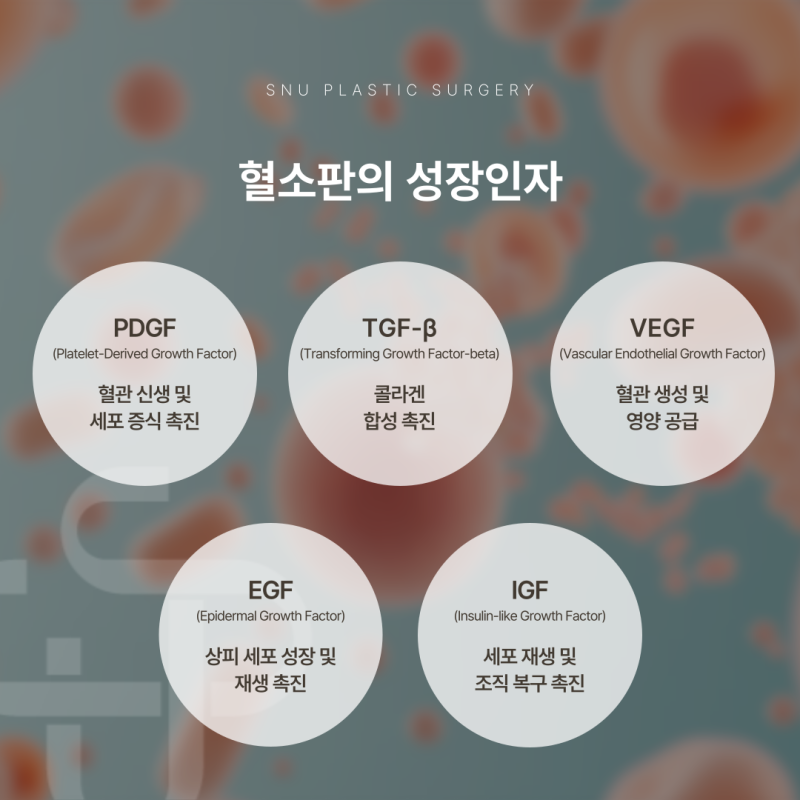
PDGF
(Platelet-Derived Growth Factor)
Promotes angiogenesis and cell proliferation
TGF-β
(Transforming Growth Factor-beta)
Promotes collagen synthesis
VEGF
(Vascular Endothelial Growth Factor)
Promotes blood vessel formation and nutrient supply
EGF
(Epidermal Growth Factor)
Promotes epidermal cell growth and regeneration
IGF
(Insulin-like Growth Factor)
Promotes cell regeneration and tissue repair
These growth factors activate cells in the injected areas (scalp, periorbital area, skin),
promoting collagen and elastin production,
attracting stem cells, and assisting in blood vessel formation to achieve fundamental tissue regeneration.
# Why Do I Still Recommend PRP?
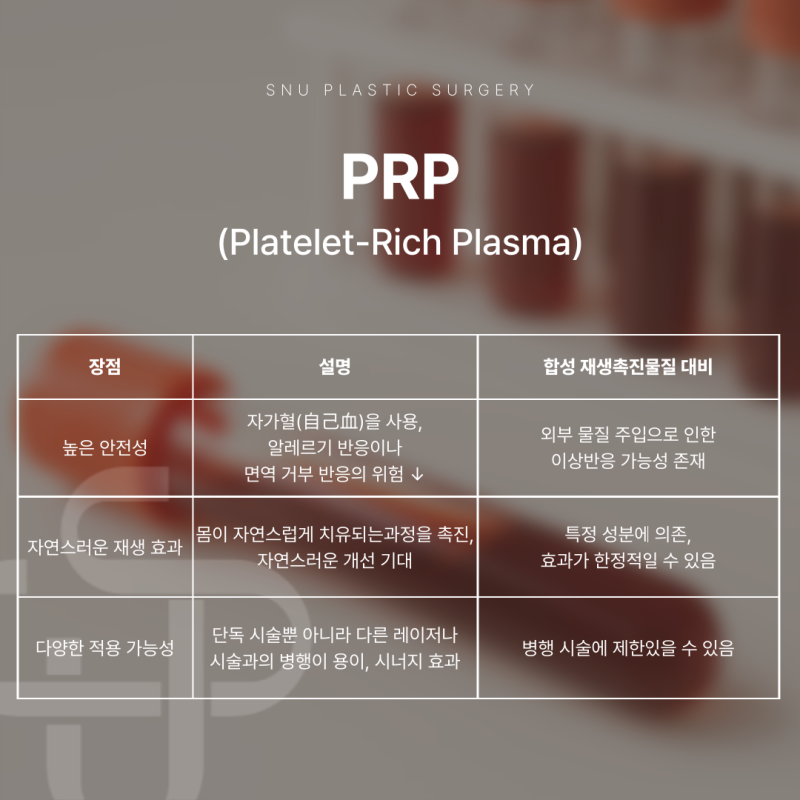
Please refer to the table below for the three major advantages of PRP compared to synthetic regenerative substances.
# Specific Indications: Effects on Hair Loss, Dark Circles, and Fine Wrinkles
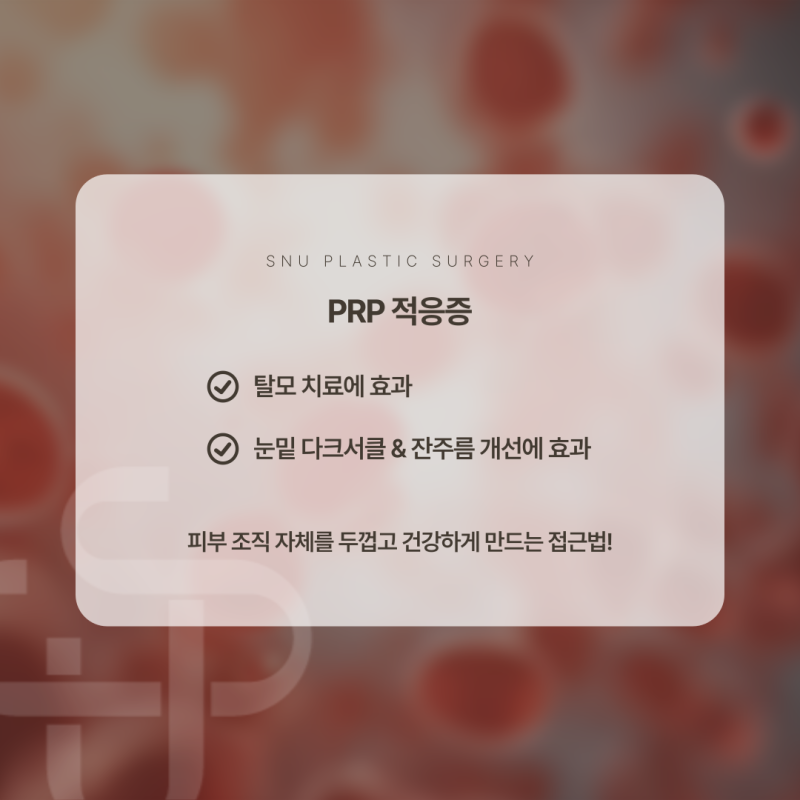
✨ Hair Loss Treatment
Studies show that PRP strengthens hair follicles, extends the growth cycle, and increases hair density and thickness.
Positive results have been reported for both androgenetic alopecia (male/female pattern baldness) and alopecia areata,
with effects expected after a minimum of 3-5 sessions.
✨ Improvement of Under-Eye Dark Circles and Fine Wrinkles
The skin under the eyes is thin, often revealing blood vessels or appearing hollow due to collagen loss.
PRP comprehensively improves dark circles by increasing collagen and elastin in the skin to enhance elasticity and improving vascular health.
While fillers ‘fill space’,
PRP is a fundamental approach that ‘makes the skin tissue itself thicker and healthier’.
# Disadvantages of PRP and How to Overcome Them
Of course, PRP is not a perfect treatment.
Let's fairly discuss its disadvantages and solutions.
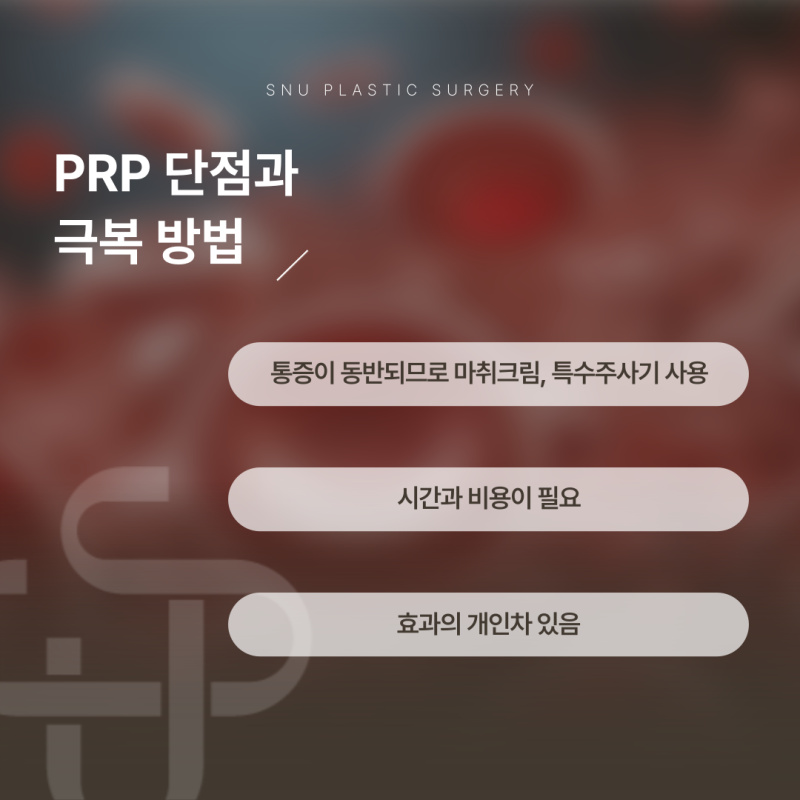
📍 Pain
Pain may accompany injections.
To overcome this, sufficient anesthetic cream can be applied,
or special injectors (such as a mesogun) that reduce pain can be used to minimize discomfort.
📍 Time and Cost
Compared to synthetic regenerative substances,
optimal results may require 3-5 consecutive sessions.
This is because PRP does not provide immediate changes but rather allows effects to manifest naturally according to the body's regenerative cycle.
📍 Individual Differences in Efficacy
Results may vary depending on the quality of the kit, centrifugation method, and the doctor's skill.
Therefore, it is crucial to choose a clinic with extensive clinical experience and reliable equipment.
✨ The Rediscovered Value of PRP ✨
It is clear that the latest synthetic regenerative substances like Rejuran are excellent options.
However, if the goal is ‘natural regeneration’ and ‘fundamental improvement’,
PRP can be a superior alternative to any other treatment.
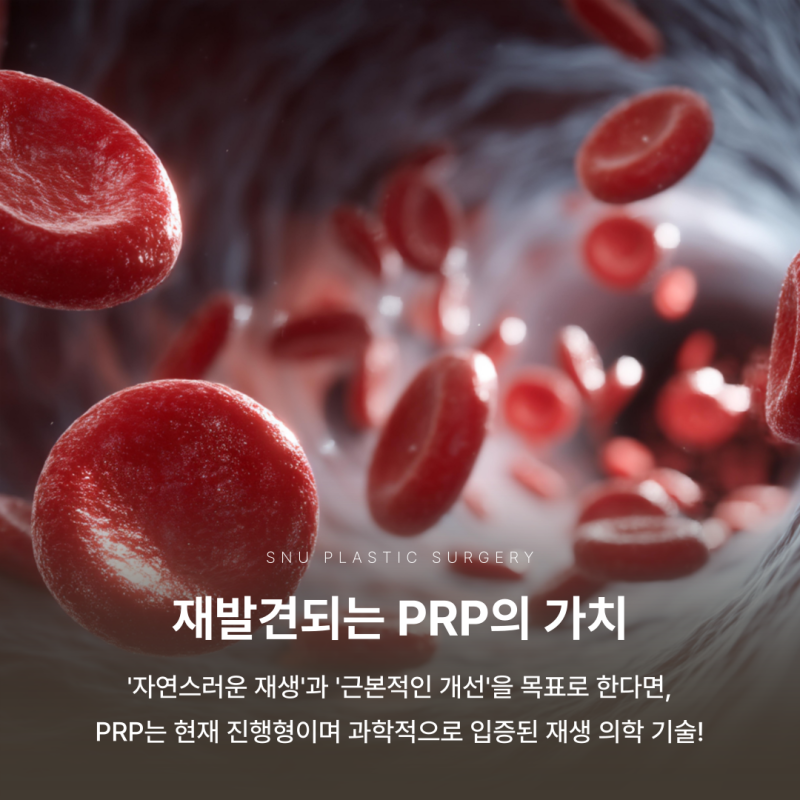
The unique mechanism of bio-signal transduction using autologous blood still remains a core pillar of regenerative medicine.
Its true value is often demonstrated when used in combination with other treatments,
and its clinical value will continue to grow.
I hope that those who read this article will view PRP not merely as an old treatment,
but as a ‘currently ongoing’ and scientifically proven regenerative medicine technology.
I hope this information helps provide a more reliable explanation during consultations.
*Note: This article references research results and medical information.
Homepage
📌 KakaoTalk Channel (Click image below to navigate)