2026-07-21
The Risks and Alternatives of Cosmetic Surgery for Adolescents
This article discusses the alarming trend of cosmetic surgery among adolescents, highlighting the physical and psychological risks, ethical concerns, and alternative approaches to address appearance-related anxieties.
Cosmetic surgery for adolescents: To prevent it from becoming a knife that cuts off growth, doctors must disclose the risks and alternatives.

Hello,
This is Dr. J from Cheongdam SNU Plastic Surgery Clinic.
‘I heard that parental consent is all that's needed!’
When a 14-year-old girl requested lower eyelid fat repositioning surgery,
I refused her request,
pointing to her immature cheekbones.
Cosmetic surgery for adolescents whose skeletal growth is not yet complete
can be the beginning of lifelong
deformities.
# The Current State of Adolescent Cosmetic Surgery: Alarming Statistics and Spreading Background
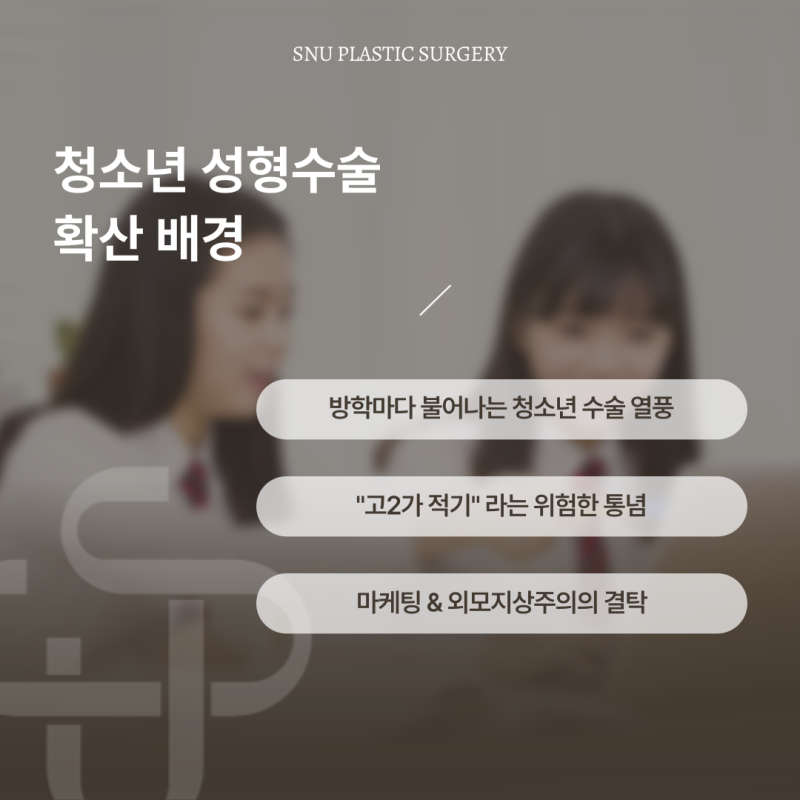
⚠️ The adolescent surgery craze that swells every vacation
Every winter vacation, plastic surgery clinics are
overflowing with adolescents.
Individuals in their teens and twenties account for over 60%
of all cosmetic surgery patients,
with double eyelid surgery (50%) and nose surgery (30%)
being the most popular procedures.
One survey even found that 15% of middle school students
have actually undergone surgery.
⚠️ The dangerous misconception that ‘the second year of high school is the right time’
In a survey of high school students in Seoul,
65% reported appearance complexes,
and over 50% expressed a desire for plastic surgery.
Furthermore, the perception that ‘the second year of high school is the peak time for surgery’
is widespread, with students anticipating employment and college entrance exams
opting for proactive surgery.
⚠️ The collusion of marketing and lookism
Exaggerated plastic surgery advertisements targeting adolescents
are rampant on bus and subway ads (56.8%), social media (24.5%), etc.
30.4% choose a clinic based solely on these ads,
and information about side effects is mostly omitted.
# Physical Risks: The Three Major Risks That Damage Growth
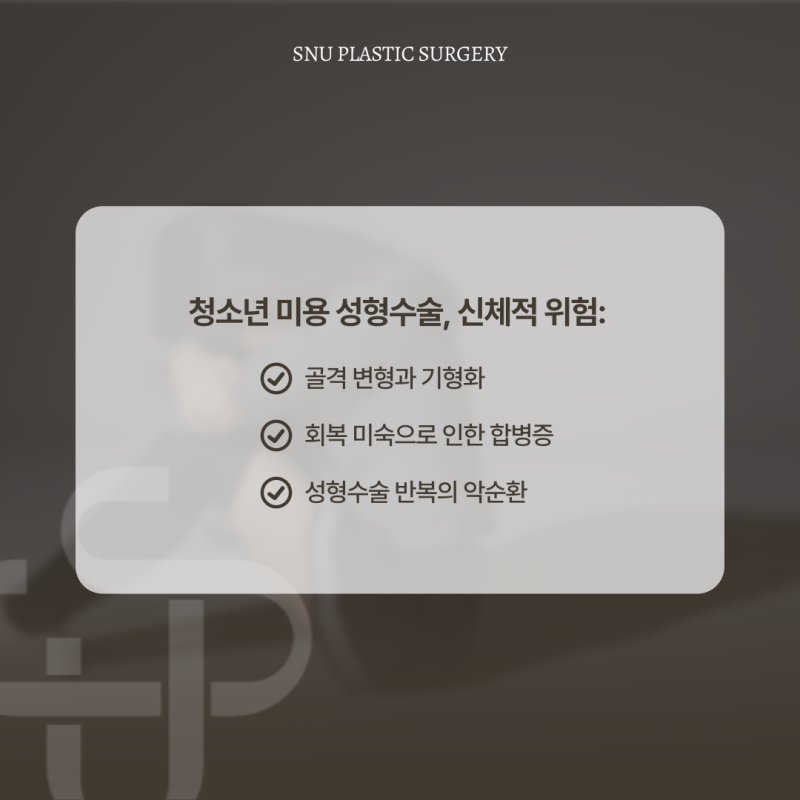
⚠️ Skeletal deformation and malformation
In the case of nose surgery,
if performed before the age of 18, the pressure from implants
can cause deviation and depression.
Jaw surgery can
cause damage to tooth roots,
and facial contouring surgery can
lead to abnormal bone growth.
For lower eyelid fat repositioning,
if performed at age 14 when cheekbone development is not complete,
there is a more than 70% chance that the repositioned fat will sag or become asymmetrical
as the bone continues to grow.
⚠️ Complications due to immature recovery
Adolescents have weaker immune systems than adults,
doubling the risk of infection, necrosis, and nerve damage.
Among actual side effect cases,
asymmetry (9.4%), scarring (5.7%),
and inflammation (3.6%) are the most frequent.
⚠️ The vicious cycle of repeated plastic surgery
Surgery performed during growth can lead to additional surgeries
due to changes in body shape.
Even adult plastic surgery results often only last
5-7 years,
meaning early recipients may undergo surgery
2-3 more times throughout their lives.
# Mental Storm: When Surgery Becomes a Psychological Wound
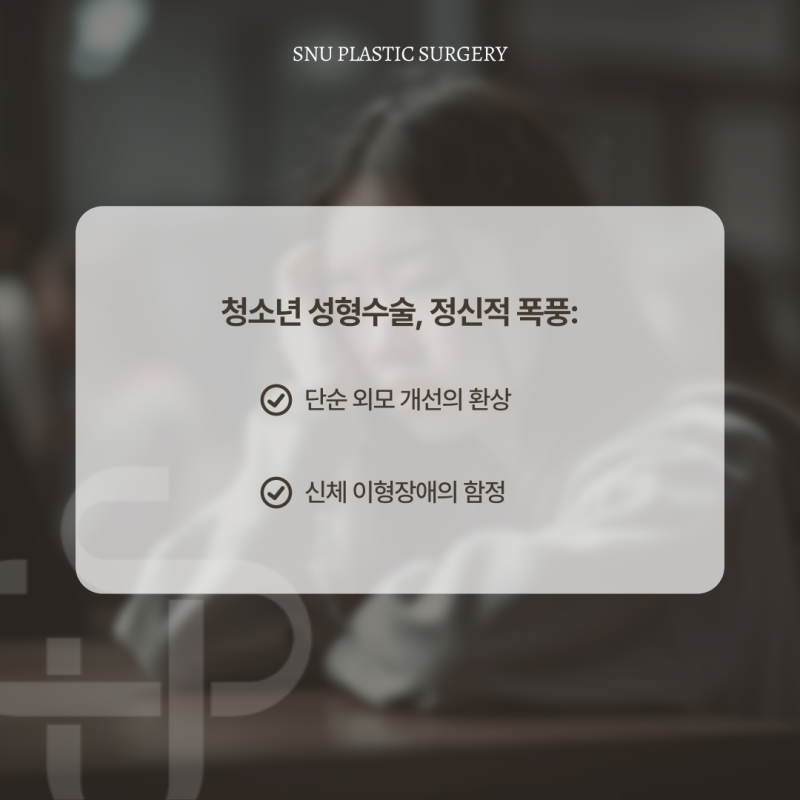
📍 The illusion that ‘life will change if I become prettier’
72.5% of teenagers cite ‘simple appearance improvement’
as their motivation for surgery, but their satisfaction is
significantly lower than that of patients over 20.
Especially for surgeries aimed at resolving bullying or for employment purposes,
when expectations are frustrated, it can lead to depression and suicidal ideation.
📍 The trap of Body Dysmorphic Disorder
Adolescents with strong appearance obsession continue to demand
further procedures after surgery, saying ‘it’s still not enough.’
According to research by Seoul National University Hospital, these individuals
show delusional dissatisfaction even with normal appearance
and experience paralysis of life functions.
‘After the surgery, I felt more lethargic. Before, I thought I only needed to fix my nose, but now my jaw and cheekbones keep bothering me.’ – From an interview with a female high school senior after jaw surgery.
# Legal and Ethical Issues: Consent is not ‘Permission’.

📍 Limitations of parental consent
Under medical law, minors can undergo surgery
with parental consent.
However, doctors have a duty to determine the patient's best interests. Countries like Germany and Italy
completely prohibit cosmetic surgery for those under 18,
and while a related bill was discussed in Korea in 2013,
it was postponed due to a lack of medical evidence.
📍 The social responsibility of doctors
We should ask ‘what surgery should be done’ rather than
‘what surgery can be done.’
The Association of Plastic Surgeons points out that ‘adolescent surgery is primarily caused by an oversupply of clinics
rather than patient demand,’
and there is a heated debate within the medical community
regarding age restrictions.
# Three Approaches That Should Precede Plastic Surgery
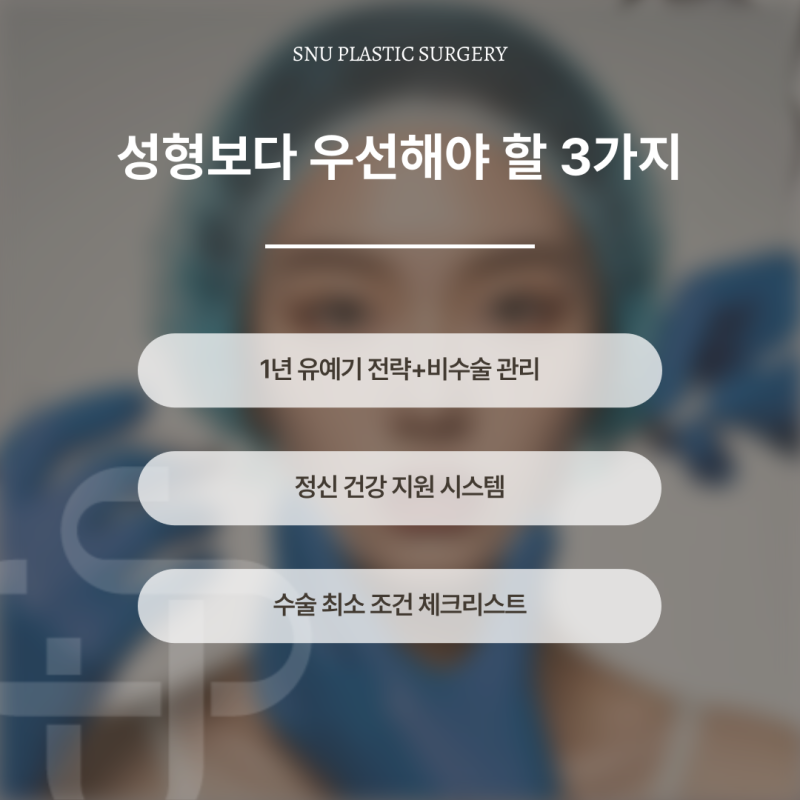
🌟 1-year grace period strategy + non-surgical management
Lifestyle correction methods include
increasing water intake,
reducing smartphone usage,
and using makeup to
alleviate dark circles.
Temporary adjustment methods include
using double eyelid tape and makeup.
🌟 Mental health support system
Pre-surgical psychiatric consultation and evaluation are needed
to screen for body dysmorphic disorder and depression.
Additionally, there are programs for redefining aesthetic consciousness,
such as ‘finding inner beauty’ workshops
and education on the diversity of celebrity vs. real faces.
🌟 Checklist for minimum surgery conditions
✅ Complete skeletal growth (confirmed by bone age test)✅ Problem persistent for 6 months or more + failure of conservative treatment checked✅ Patient can explain the purpose and risks of surgery themselves✅ Written confirmation of alignment between parent's and patient's expectations
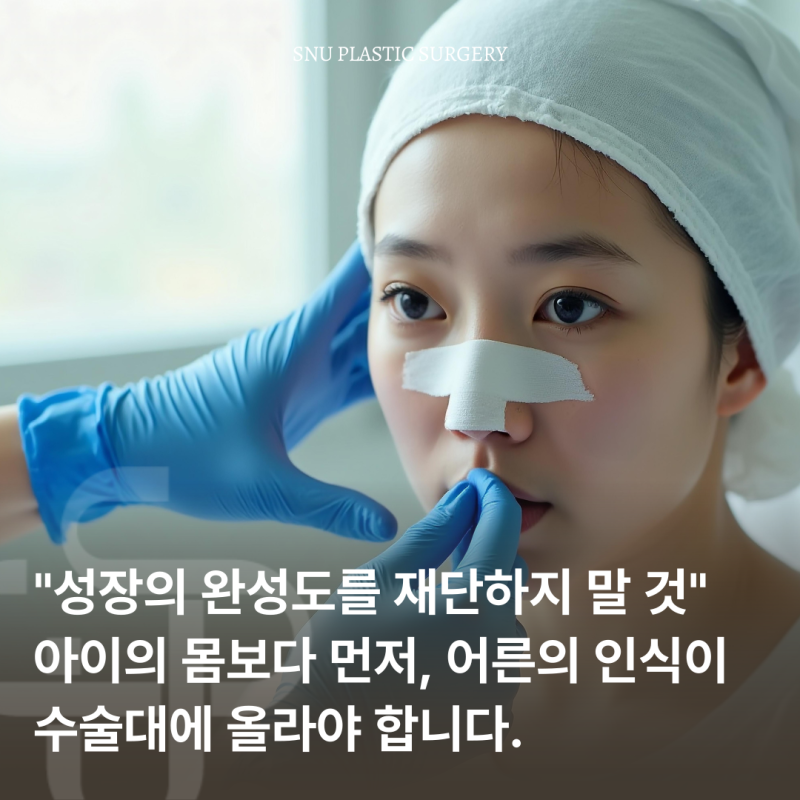
Do not cut short the completeness of growth.
The eyes you have now are an unfinished work of art.
Put down the knife that could
damage that beautiful growth.
Doctors must shift their role from surgery providers to
developmental protectors,
and society has a responsibility to dismantle the myth of
‘appearance competitiveness.’
As of 2025, a survey showing that 48% of Korean adolescents
desire plastic surgery is a warning to us all.
Before a child's body, an adult's perception
must be put on the operating table.
✔️ Homepage
✔️ KakaoTalk Channel (Click image below to navigate)


#AdolescentPlasticSurgeryRisks #LowerEyelidFatRepositioning #MedicalEthics #PreSurgeryChecklist