2026-07-21
Cheongdam-dong Eye Surgery: How to Get Rid of Under-Eye Wrinkles?
Discover how to eliminate under-eye wrinkles and sagging with Cheongdam-dong eye surgery. Learn about under-eye fat repositioning, conjunctival approach, and other surgical options at SNU Plastic Surgery Clinic for a refreshed look.

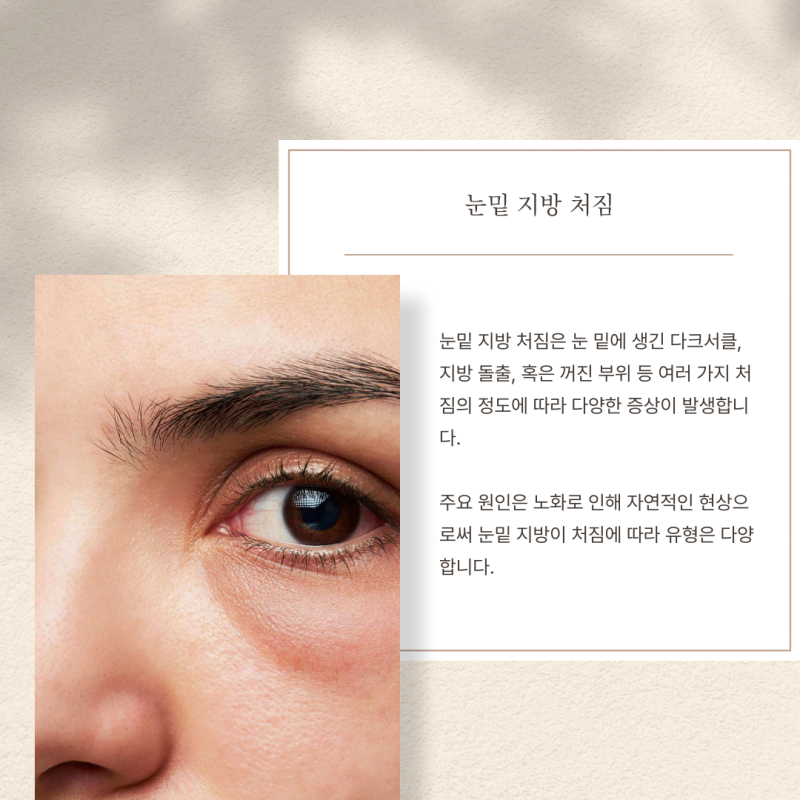
Hello. This is SNU Plastic Surgery Clinic, providing eye surgery in Cheongdam-dong.
Did you know which areas modern people most frequently seek plastic surgery for? It was the nose and eyes. As these are the most crucial parts of the face for making an unattractive nose look beautiful or transforming plain eyes, a significant portion of our visitors came for eye and nose surgeries.
However, unlike the nose, the eyes serve both aesthetic and functional purposes. Therefore, the objective of eye surgery varied depending on the age group of the clients visiting our clinic. Those seeking aesthetic improvements typically wanted to correct their eye shape or needed double eyelids.
Those with functional concerns sought improvement for conditions like ptosis, which obstructs vision, causes blurry eyes, and leads to fatigue.
However, if there's an eye surgery that blurs the line between aesthetic and functional purposes, it's under-eye fat repositioning. Under-eye fat repositioning addresses issues that arise when fat diminishes in the face due to aging or rapid weight loss.
Most middle-aged and older individuals experience a loss of elasticity and sagging of under-eye fat. Just as the nasolabial folds and jawline sag with aging, those who had a particularly large amount of under-eye fat are prone to sagging.

Under-eye Sagging
Under-eye sagging can, in some cases, lead to under-eye twitching or the formation of under-eye wrinkles.
This was categorized into individuals who experienced only twitching and those who developed only wrinkles, depending on the degree of under-eye fat sagging. Another issue was the bulging phenomenon that occurred as under-eye fat sagged, making it an area that required improvement more for aesthetic reasons than functional ones.
Therefore, at SNU Plastic Surgery Clinic, which also performs Cheongdam-dong eye surgery, eliminating under-eye wrinkles is difficult to achieve on one's own, requiring a medical procedure. Our clinic applies methods to return under-eye fat to its original position.
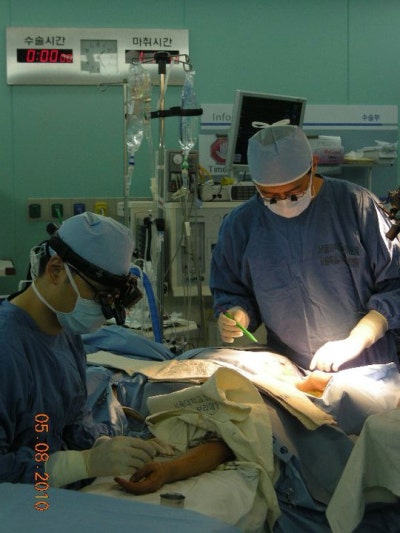
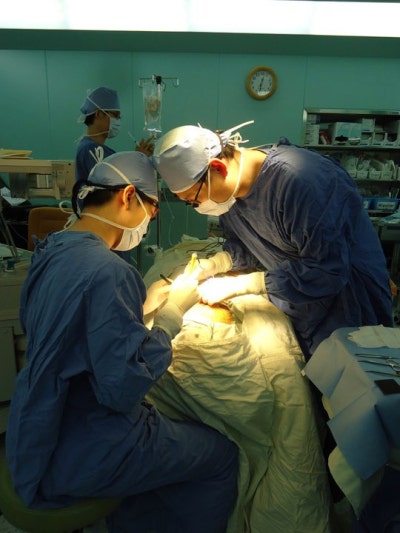
When under-eye fat sags sufficiently and protrudes, the overall impression of the face changes.
It not only creates a harsh or gloomy impression but also makes one look older than their actual age, an undesirable side effect. While Botox can temporarily maintain a normal under-eye fat state, surgical methods can be considered for clients desiring a nearly permanent solution.
Regarding this, after consulting with Director Eui-Chul Jung, the decision between the two options was up to the client.
Depending on the decision, under-eye fat repositioning can be treated non-surgically or surgically. At our clinic, we'd like to inform you about the surgical methods available for fundamental improvement.

What are the surgical methods?
As a method to eliminate under-eye wrinkles, SNU Plastic Surgery Clinic, which performs Cheongdam-dong eye surgery, can perform the conjunctival approach.
Among surgical methods, in addition to the conjunctival approach, there are also lower blepharoplasty incision and fat grafting combined procedures. However, the conjunctival approach is generally the most symptomatic and has a very good improvement rate because clients requiring under-eye fat repositioning typically have common problems in common areas.
The conjunctival approach was primarily needed for younger patients with good skin elasticity, where fat protrusion was the main issue.
An incision was made through the conjunctiva (inner eyelid) of the lower eyelid, and fat was then repositioned or removed. The conjunctiva could heal on its own without sutures. This not only alleviated under-eye fat sagging but also improved under-eye fat wrinkles, offering a two-for-one benefit.

Compared to other surgical methods, this approach leaves almost no external scars and has a faster recovery time, making it a preferred option when explained to clients beforehand, and the prognosis after surgery is generally good.
However, if a disadvantage were to be pointed out, it's that good results might be difficult to achieve if skin or muscle elasticity is insufficient. Nevertheless, Director Eui-Chul Jung of SNU Plastic Surgery Clinic, who performs Cheongdam-dong eye surgery, has numerous aesthetic surgery cases, demonstrating a high understanding of clients' eye and skin conditions.
Therefore, if skin or muscle elasticity is insufficient, other options might be suggested instead of strictly using the conjunctival approach.

Severe cases may require removal
The aging process is an unavoidable natural phenomenon, but clients who cannot accept it can opt for under-eye fat removal instead of repositioning when visiting SNU Plastic Surgery Clinic for Cheongdam-dong eye surgery, especially if the under-eye fat sagging is severe.
This is also known as skin excision, or in simpler terms, under-eye fat removal surgery.
This method is considered when the area for fat repositioning is too wide, and the skin is very thin. While sufficient improvement can usually be achieved without this method, if it becomes necessary, please consult thoroughly and consider carefully before making a decision.
















Frequently Asked Questions
Why do under-eye wrinkles and sagging occur?
Under-eye wrinkles and sagging primarily occur due to aging or rapid weight loss, which causes facial fat to diminish, leading to a loss of elasticity and sagging of the under-eye fat. This can result in under-eye twitching, wrinkles, or bulging.
What are the main surgical methods for under-eye fat repositioning?
One common surgical method for under-eye fat repositioning is the conjunctival approach. Other methods include lower blepharoplasty incision and fat grafting combined procedures, but the conjunctival approach is generally symptomatic and has a good improvement rate.
In what cases is the conjunctival approach suitable?
The conjunctival approach is primarily needed for younger patients with good skin elasticity, where under-eye fat protrusion is the main issue. It involves making an incision through the conjunctiva of the lower eyelid to reposition or remove fat, with the advantages of minimal external scarring and fast recovery.
Is the conjunctival approach possible for severe under-eye fat sagging?
No, if skin or muscle elasticity is insufficient, or if under-eye fat sagging is very severe, the conjunctival approach alone may not yield good results. In such cases, other surgical methods or under-eye fat removal surgery may be considered.
Are there any short-term methods to improve under-eye fat?
Yes, in the short term, Botox injections can help maintain a normal under-eye fat state. However, if a nearly permanent improvement is desired, surgical methods are recommended.
When is under-eye fat removal surgery considered?
Under-eye fat removal surgery is considered when the area for fat repositioning is too wide, and the skin is very thin. While repositioning usually provides sufficient improvement, in severe cases, it can be decided after thorough consultation and careful consideration.