2026-07-21
Reasons for Persistent Pain After Cheongdam-dong Ultherapy Lifting Procedure
Learn why pain may persist after Ultherapy lifting procedures and how proper technique and customization at SNU Plastic Surgery Clinic can prevent discomfort and ensure optimal results.
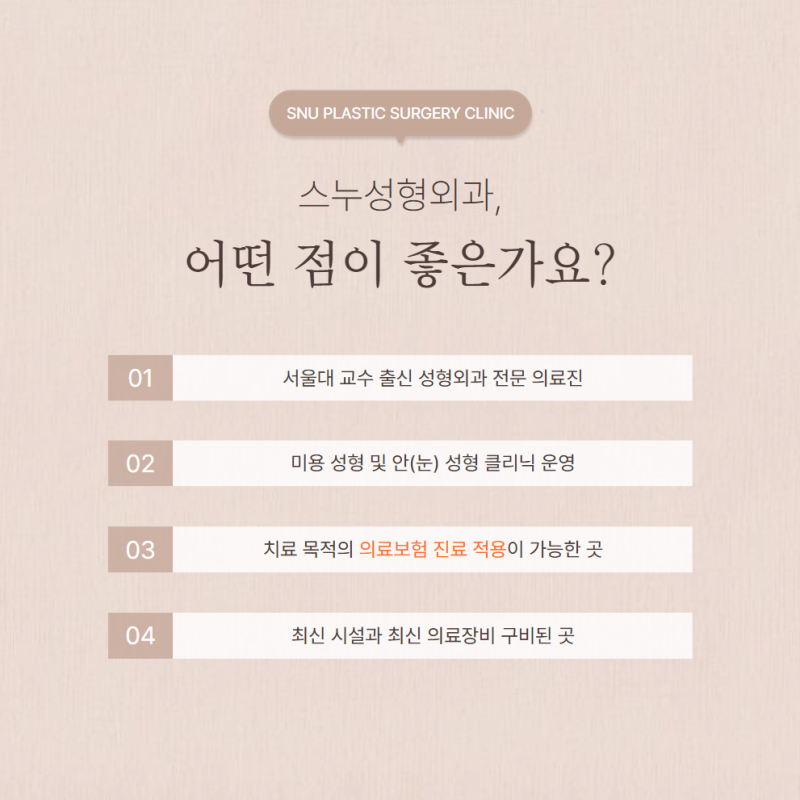
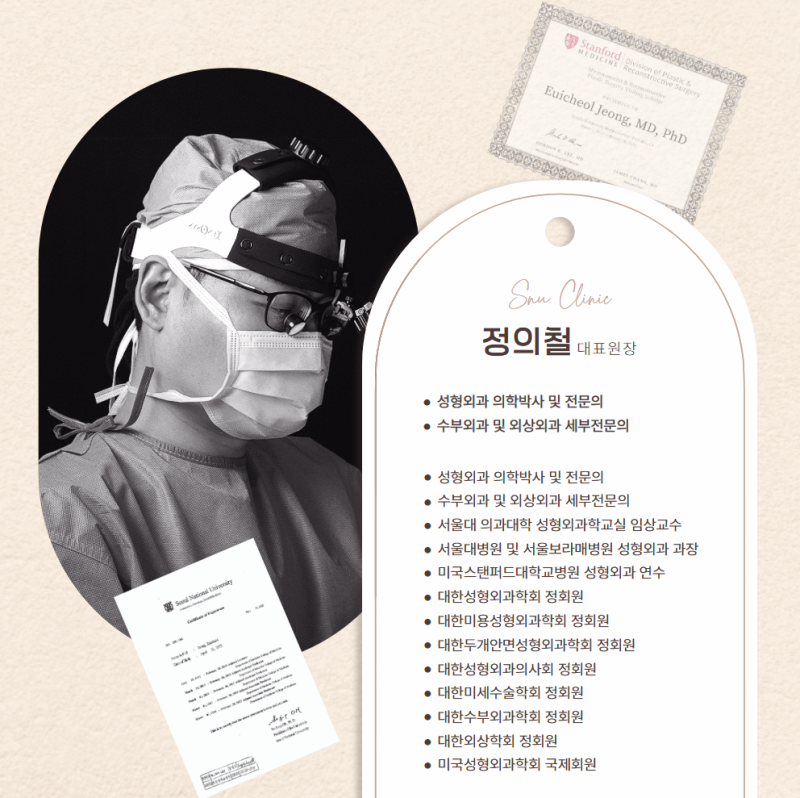
Hello. This is SNU Plastic Surgery Clinic, where we perform Cheongdam-dong lifting procedures.
Lifting, a term very familiar to the public, originally meant ‘to pull up’ or ‘to raise’. This term was not originally used in a cosmetic context but was frequently used for machinery or exercise. However, as cosmetic technology continuously improved, thread lifting became known to the world as a method to restore lost elasticity and reduce wrinkles simultaneously.
Consequently, a new term needed to be coined, but nothing specific came to mind. Since it was a method of pulling up the skin, the terms ‘thread’ and ‘lifting’ were combined to create ‘thread lifting’. This became a widely used term both domestically and internationally.
Thus, thread lifting was dominant from the late 2000s to the early 2010s. However, from the late 2010s to the early 2020s, lifting technology became more simplified and diverse, leading to the emergence of laser lifting.
Therefore, young people in their 20s and 30s today are most familiar with laser lifting, and among these, Ultherapy is one of the most well-known.
Another lifting procedure that stands shoulder to shoulder with Ultherapy is Shurink. Actress Lee Min-jung was the model for Ultherapy, and actress Lee Na-young was the model for Shurink. Thanks to effective use of advertising models, these procedures have become popularized, making it easy to improve wrinkles and elasticity simultaneously these days.
Pain After Ultherapy Procedure
However, among the clients who visit SNU Plastic Surgery Clinic for Cheongdam-dong lifting procedures, some had their first Ultherapy experience elsewhere and experienced persistent pain for about three days after the Ultherapy procedure, leading them to visit a nearby clinic to confirm if the procedure was done correctly.
Laser lifting procedures like Ultherapy and Shurink both use ultrasound to improve wrinkles and elasticity.
Why does pain after an Ultherapy procedure last so long?
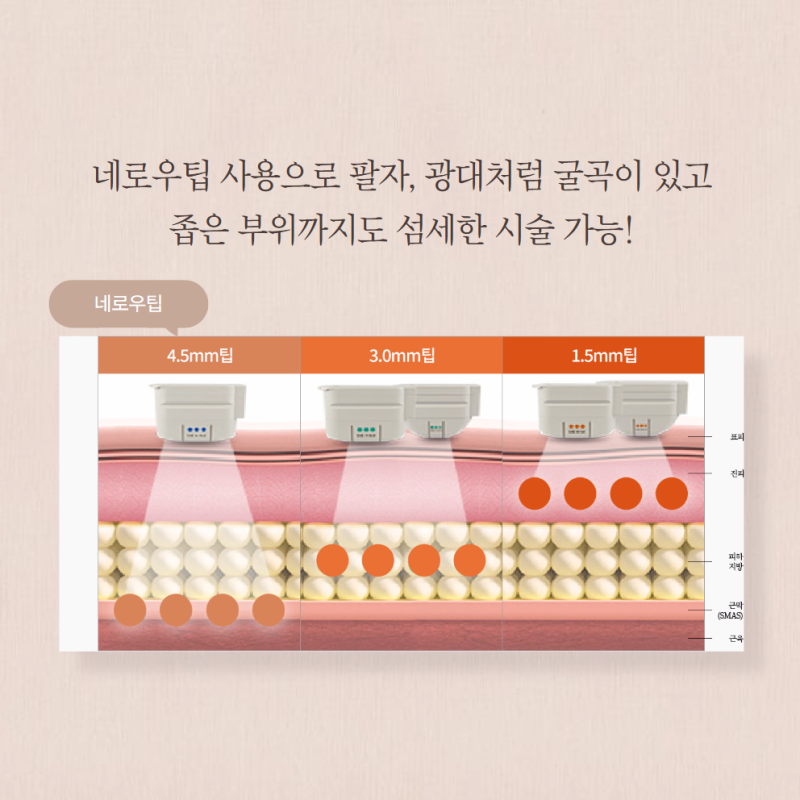
This was because the practitioner did not properly assess the client's skin layer condition and failed to adjust the intensity. Ultherapy lifting has three functions that control the depth of ultrasound energy.
The three functions are divided into 1.5mm (epidermal layer), 3.0mm (dermal layer), and 4.5mm (fascial layer). Therefore, it was crucial to have a thorough consultation with the client to understand which areas they wanted to improve and how.
After understanding this, the practitioner must decide which skin layer to target for improvement. If this is not handled properly, especially if the fascial layer, located deep within the skin, is treated carelessly, it can cause not only pain during the procedure but also prolonged pain afterward.
However, it is important to know that for clients experiencing Ultherapy for the first time, it is natural to feel pain during the procedure. If the pain becomes unbearable, it is crucial to immediately inform the practitioner so that the intensity can be adjusted.
Ultherapy at SNU Plastic Surgery Clinic
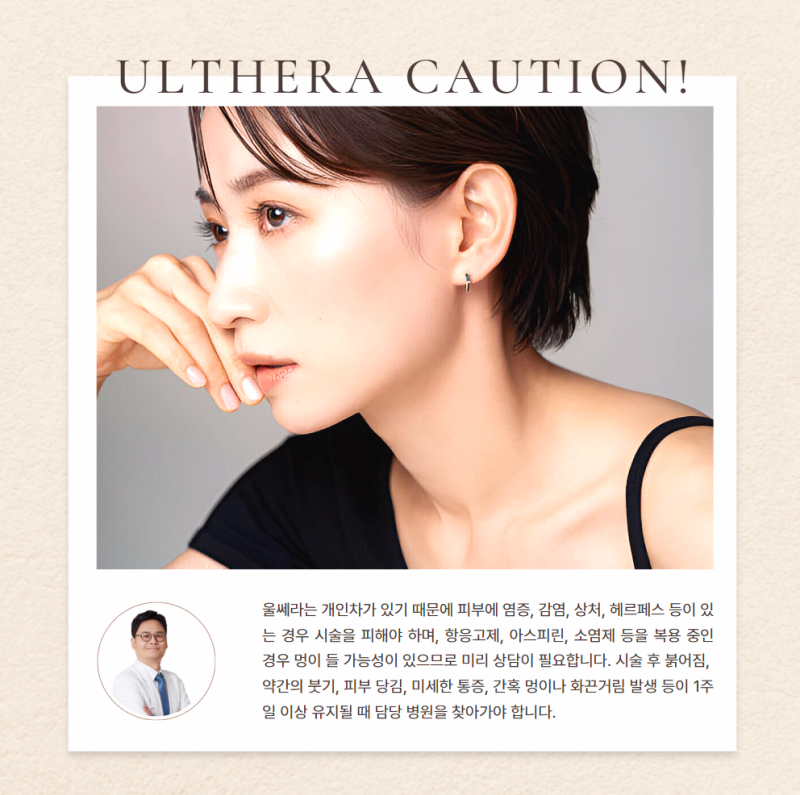
Furthermore, if pain after an Ultherapy procedure persists for about a week, this should also be considered problematic, and you should seek separate consultation and action from the medical staff at the clinic where you received the procedure.
However, if a client who has already experienced such difficulties is reluctant to return to the same place, SNU Plastic Surgery Clinic, which performs Cheongdam-dong lifting procedures, can offer assistance. Our clinic provides a variety of aesthetic improvement methods for the desired areas, using both non-surgical and surgical approaches.
For Ultherapy, it is essential to properly understand the client's skin health condition and how to improve specific areas before proceeding. Therefore, to achieve desired results without regret, it is crucial to receive the procedure at a clinic with extensive experience in skin treatments.
I mentioned the three depth adjustments: the epidermal layer depth is applied for improving fine wrinkles and skin texture, while the dermal layer depth is used to promote collagen regeneration and improve deep wrinkles.
The fascial layer (SMAS) requires careful depth control to reach this layer. This method is applied to middle-aged and older individuals who need overall facial improvement. Although it is non-invasive, the results may or may not be as desired, depending on the practitioner.
If you undergo a facial lifting procedure at SNU Plastic Surgery Clinic that targets the fascial layer and are not satisfied with the improvement in a specific area, you can receive separate after-service upon re-visiting.
Many people consider Ultherapy a very simple procedure, thinking it's not as harsh as thread lifting, but that is not the case at all.
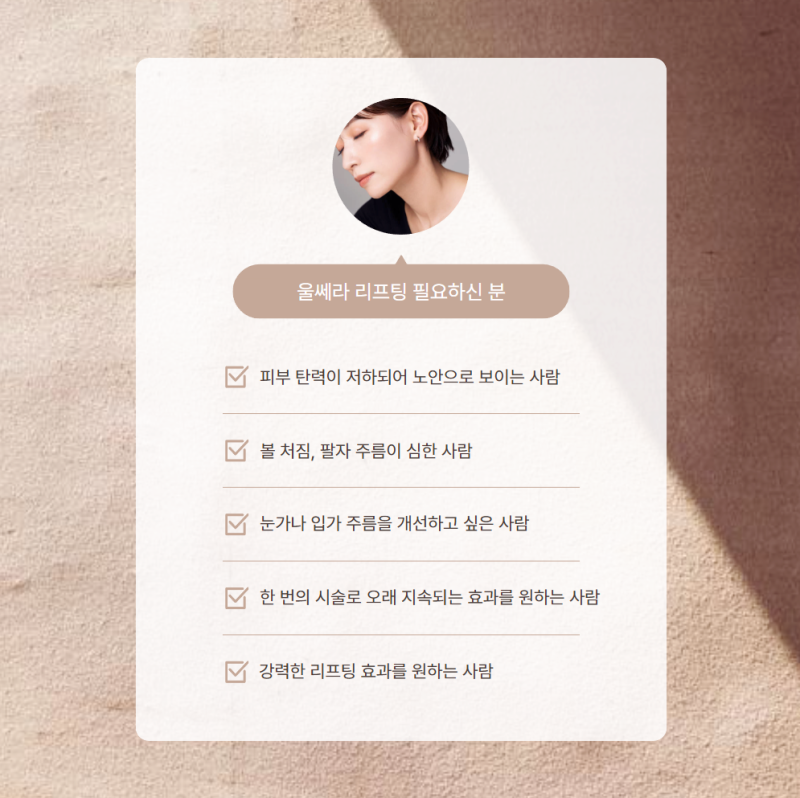
Especially for Ultherapy, which is a type of laser lifting, the practitioner's skill is crucial. Therefore, it is essential to understand that receiving the procedure at a clinic that properly adjusts the intensity according to your skin condition is very important.
SNU Plastic Surgery Clinic, which performs Cheongdam-dong lifting procedures, strives to achieve desired results through one-on-one customized consultations because we thoroughly understand the client's skin condition and recognize that skin health varies depending on individual constitution.