2026-07-21
'Artificial Implant Materials' Recommended by a Plastic Surgeon
Discover the principles for selecting artificial implant materials, including solid silicone implants and hyaluronic acid fillers. Learn about their applications, advantages, and crucial management points for long-term safety and effectiveness.

Hello,
This is Dr. J from Cheongdam SNU Plastic Surgery Clinic.
Today, I will explain artificial implant materials.
When autologous tissue is not an option,
many plastic surgeons consider solid silicone implants and
hyaluronic acid materials over other options.
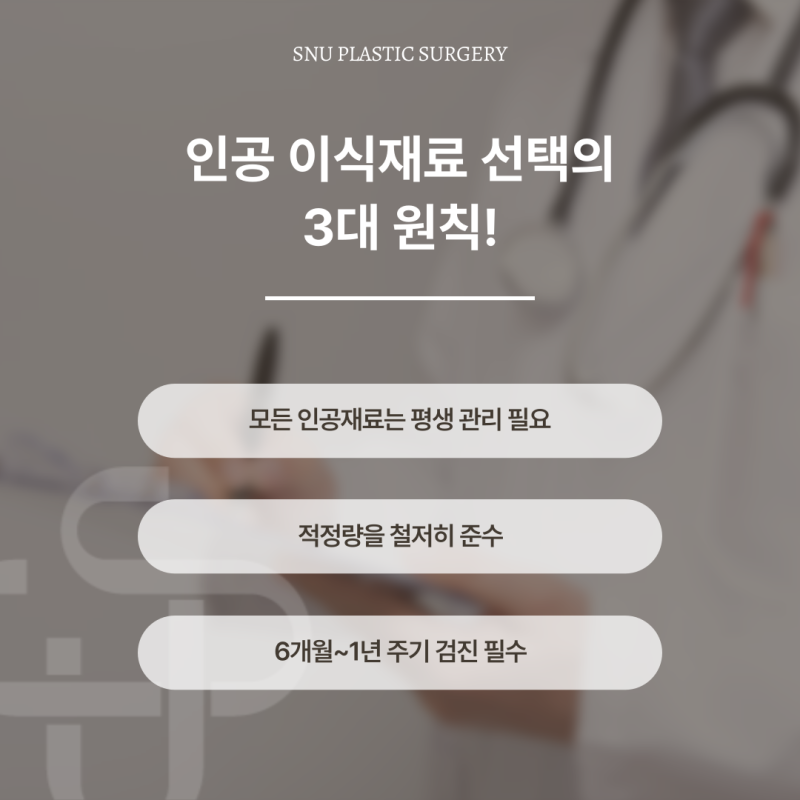
# Three Major Principles for Selecting Artificial Materials
1. ‘Biologization is a myth’
All artificial materials require lifelong management.
2. ‘Overuse = disaster’
The appropriate amount must be strictly adhered to.
3. ‘Follow-up observation is crucial’
Regular check-ups every 6 months to 1 year are essential.
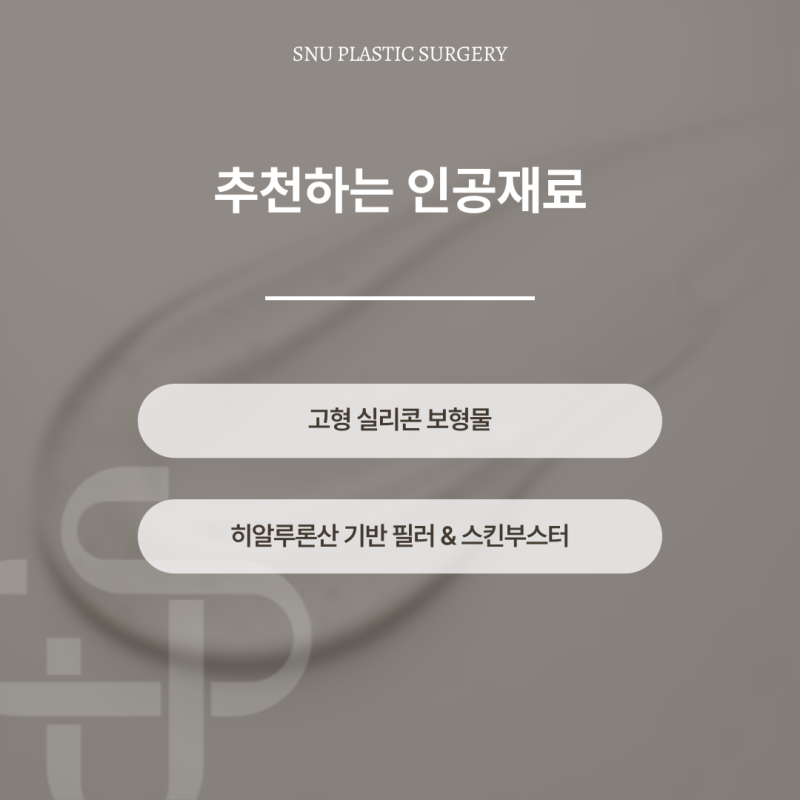
# Recommended Artificial Materials
① Solid Silicone Implants
Indications:
- Breast augmentation: One-time, large-volume correction
- Nose/chin augmentation: Areas requiring structural support
Key advantages:
- Initial results maintained for 10-15 years
(FDA long-term follow-up data)
- Complete removal possible if problems arise
- Most have 50 years of verified clinical safety
📌 Management points (especially for breast implants):

Precautions
After 15 years,
the risk of capsular calcification and deformation increases by 23%.
② Hyaluronic Acid-based Fillers
& Skin Boosters
Indications:
- Correction of cheeks, lips, and under-eyes
- Areas where autologous fat cannot be replaced, such as
moisturization and improvement of fine skin texture
Advantages
- Can be dissolved with hyaluronidase (antidote) if problems occur.
Disadvantages
With inappropriate and indiscriminate use,
there is a possibility of
skin necrosis or blindness due to vascular damage.
Vascular accidents are not a problem caused by the material itself;
they can also occur with autologous fat injection.
Therefore, procedures should be performed by a skilled specialist.

🚫 Contraindication Principles
1) Caution with exceeding 10cc per session
(Increased risk of infection)
2) Do not inject excessive amounts into the epidermal layer
(Causes skin necrosis)
3) Caution with use in unauthorized areas
such as the periosteum or muscle layer
✔️ Emergency Preparedness Checklist
- Always confirm that hyaluronidase (dissolving agent) is available
during the procedure.
- Monitor for symptoms of vascular embolism within 24 hours post-procedure
(pain, pallor, spots).
📌 From a plastic surgeon's perspective,
materials that require careful use

✔️ Especially collagen stimulators,
which are popular these days,
unlike hyaluronic acid preparations, do not have a dissolving agent,
and if excessive nodules form or problems occur,
it is very difficult to manage.
# Three Major Risks of Artificial Material Surgery and Procedures Overseas
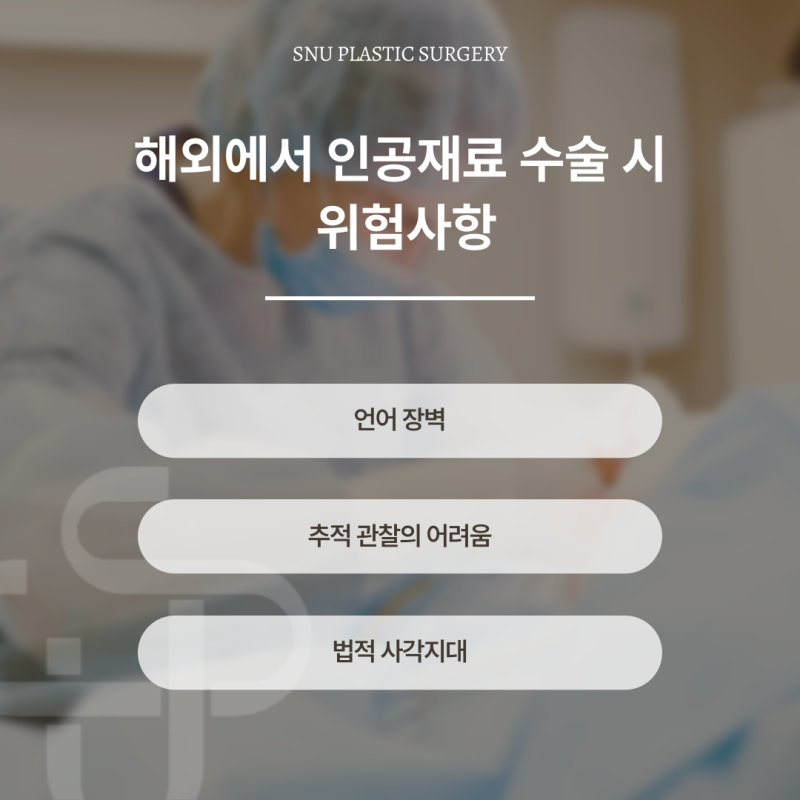
1. ‘Language barrier’
There is a possibility of errors in communicating allergy history or medications.
2. ‘Inability to follow up’
If complications occur, there is no local treatment network.
3. ‘Legal blind spot’
The rate of relief for damages from overseas procedure side effects is less than 12%.
📍 Safety Measures 📍
Only undergo procedures at domestically certified hospitals or
with qualified specialists.
And only if follow-up observation is possible for at least 1 year after the procedure or surgery.

Artificial materials are a temporary solution.
If there is no management plan that anticipates 10 years ahead,
they should never be chosen.
If autologous tissue is an alternative,
choose silicone or hyaluronic acid preparations depending on the case,
but be aware that about 1 year of follow-up observation is necessary after all artificial material procedures.
Be cautious with procedures using artificial materials overseas,
as there are limitations in follow-up observation and aftercare.
A word from the medical staff
‘When performing surgery, I always
explore the possibility of using autologous tissue first.’
※ Treatment methods may vary depending on individual conditions,
so please consult with a plastic surgeon.
✔️ Homepage
✔️ KakaoTalk Channel (Click image below to go)