2026-07-21
Non-Implant Hump Nose Correction: When is it Suitable?
Non-implant hump nose correction is often more suitable for Koreans due to their distinct nasal structure. This method uses autologous cartilage to reshape the nose, focusing on elevating the nasal tip and smoothing the hump without bone reduction, leading to natural results.
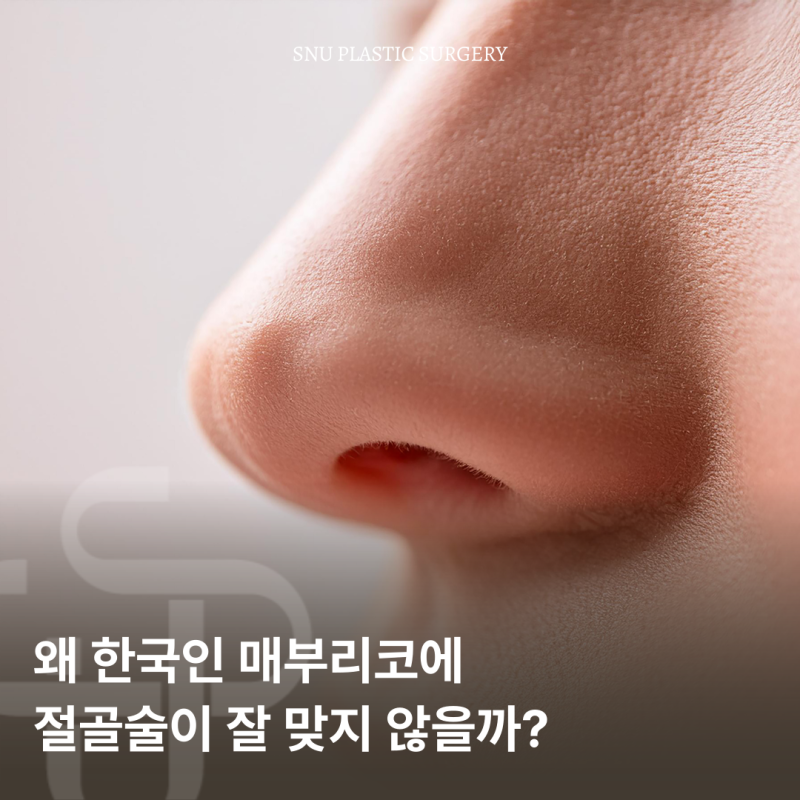
Non-Implant Hump Nose Correction: When is it Suitable?

Hello,
This is Dr. J from Cheongdam SNU Plastic Surgery Clinic.
When you think of hump nose correction, do you usually imagine it as a ‘bone-shaving surgery’?
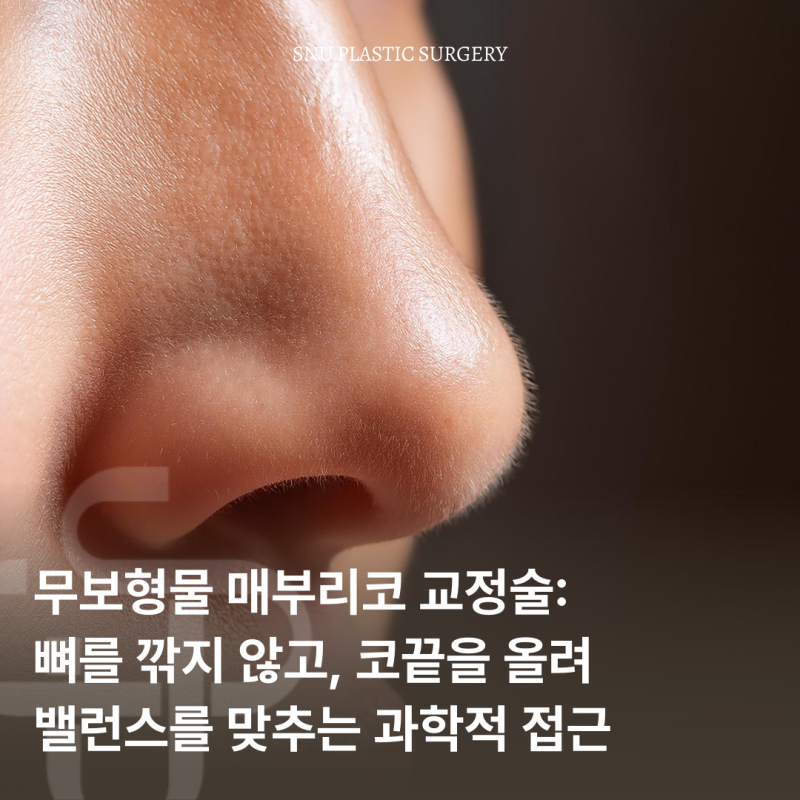
However, hump nose correction for East Asians, including Koreans, is fundamentally different from that for Westerners.
For most Korean patients with a hump nose, osteotomy (bone shaving) is not only unnecessary, but a non-implant technique also yields more natural results.
#1. Why is osteotomy not well-suited for Korean hump noses?
The nasal structure of Koreans differs significantly from that of Westerners.
📍 Low Radix:
The starting point of the nose is deeply recessed, posing a risk of the nose becoming excessively low if osteotomy is performed.
📍 Developed Septal Cartilage:
Cartilaginous humps are more prevalent than bony ones, making repositioning more effective than shaving.
📍 Accompanied by a Droopy Nasal Tip:
Simply removing the hump alone cannot improve the overall nasal line.
For Korean hump noses, the key is to harmonize the low radix and droopy nasal tip rather than just focusing on the hump itself.
#2. The 3-Step Principle of Non-Implant Hump Nose Correction
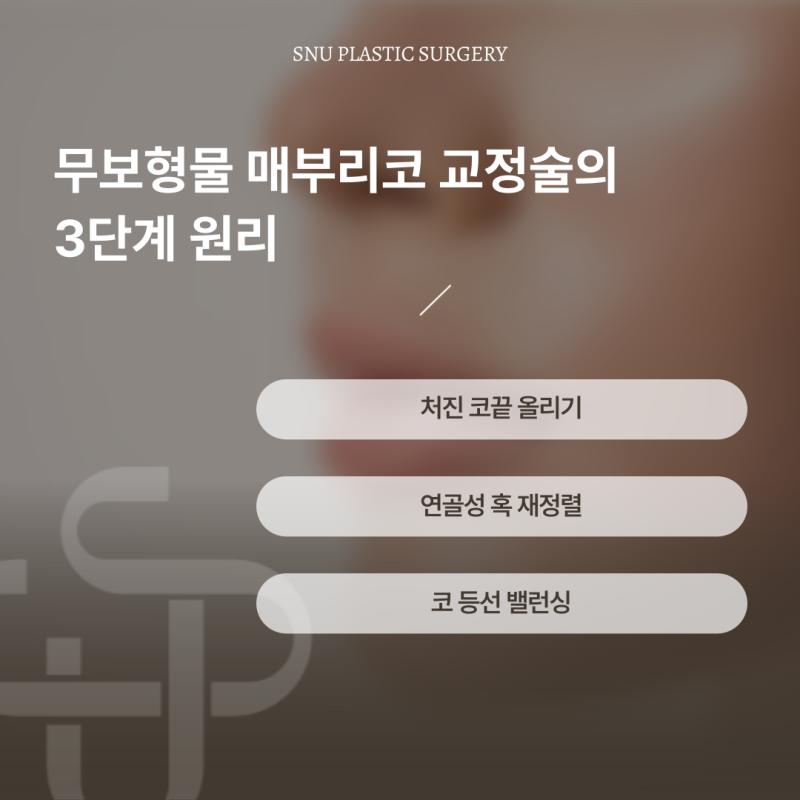
The nasal structure is reconstructed using only autologous cartilage (septal, ear, or rib cartilage) without implants.
1. Elevating the Droopy Nasal Tip
: Repositioning alar cartilage + extending septal support to increase the nasal tip angle.
2. Realignment of the Cartilaginous Hump
: Adjusting the position of the protruding cartilage instead of shaving it down, creating a smooth connection in the line.
3. Balancing the Dorsum
: Resolving unevenness by grafting autologous cartilage between the newly set nasal tip and the hump.
Covering a hump nose with an implant can make the nose appear larger and blunter.
Accurate structural correction is necessary to reduce the actual size of the nose.
#3. In what cases is non-implant surgery suitable?
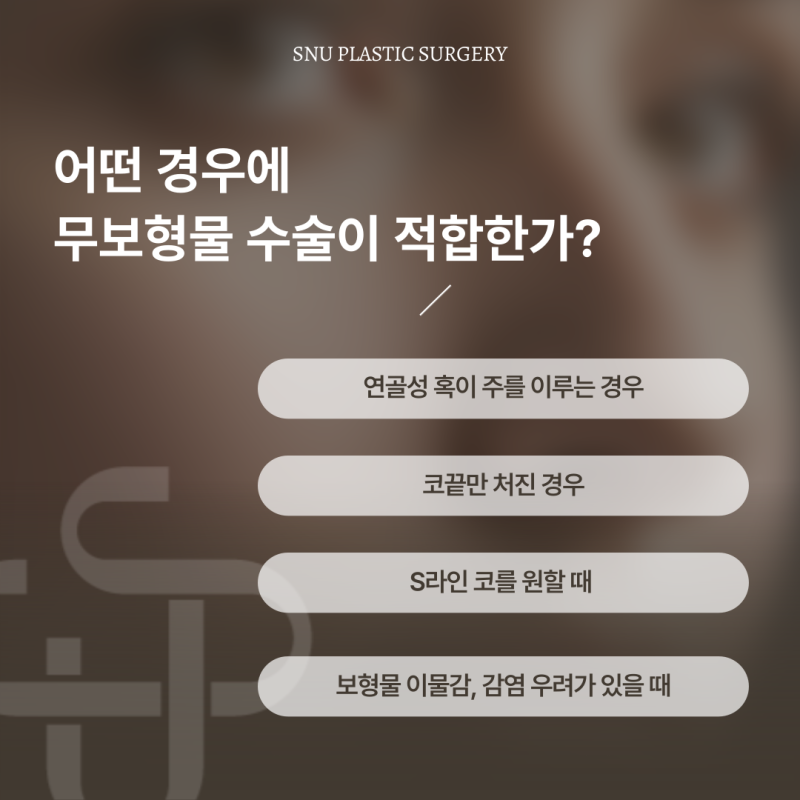
Not all hump noses can be corrected without implants.
Suitable cases include the following:
✅ Cases where cartilaginous humps are predominant (over 80% of Koreans).
✅ Cases where the height of the glabella to the nasal bridge is sufficient, but only the nasal tip is droopy.
✅ When desiring a slightly higher S-line nose rather than a straight one.
✅ When there are concerns about foreign body sensation/infection with implant insertion.
If the nasal bridge height is already sufficient, correcting only the droopy nasal tip without touching the bone can improve a hump nose.
#4. Limitations and Alternatives of Non-Implant Rhinoplasty

There are also cases where osteotomy is essential.
⚠️ When a bony hump is prominent (common in Westerners, less than 10% in East Asians).
⚠️ When the nasal bone width is excessively wide (requires width reduction with osteotomy).
⚠️ When Keystone (bone-cartilage junction) deformation is severe (requires precise correction with osteotomy).
Osteotomy that preserves the Keystone is an advanced technique that removes only the hump without damaging surrounding tissues using precise osteotomy equipment.
A nasal splint after surgery is essential for fixing the cartilage graft.
It must be maintained for at least 7 days, even if uncomfortable, to prevent deformation.
#5. Expected Effects After Non-Implant Surgery
✨ Natural Nose Height Maintenance:
Optimizing the original nasal structure without implants.
✨ Softening of Strong Impressions:
Elevating the droopy nasal tip → creating a softer facial line.
✨ Potential for Simultaneous Improvement of Breathing Function:
Alleviating nasal congestion by simultaneously correcting septal deviation.
✨ Semi-Permanent Results:
Unlike fillers that are reabsorbed, autologous cartilage is permanent.
When implants are removed, the naturally beautiful nasal bridge is revealed.
Unnecessary implants can actually obscure the inherent beauty of the nose.
Non-implant hump nose correction is centered on a paradigm shift from ‘shaving and covering’.
Koreans often have a naturally low nasal bridge, so simply removing the hump can create an uneven line.

To achieve optimal results,
✅ Consult with an experienced plastic surgeon for an accurate diagnosis.
✅ Always confirm whether osteotomy is truly necessary for your nasal structure.
The surgical fee structure should not distort the surgical method.
It is the doctor's responsibility to honestly explain the optimal method to the patient.
Please break the prejudice that hump nose surgery is all about ‘bone shaving’.
For Koreans, a scientific approach of repositioning autologous tissue is a safer and more natural solution.
✔️ Homepage
✔️ KakaoTalk Channel (Click image below to navigate)